
The Tactics Renaissance: How Star Wars Zero Company Turned Strategy Skeptics into Believers
Star Wars Zero Company is turning strategy skeptics into tactics fans, as mainstream players and critics celebrate its accessible turn-based formula.
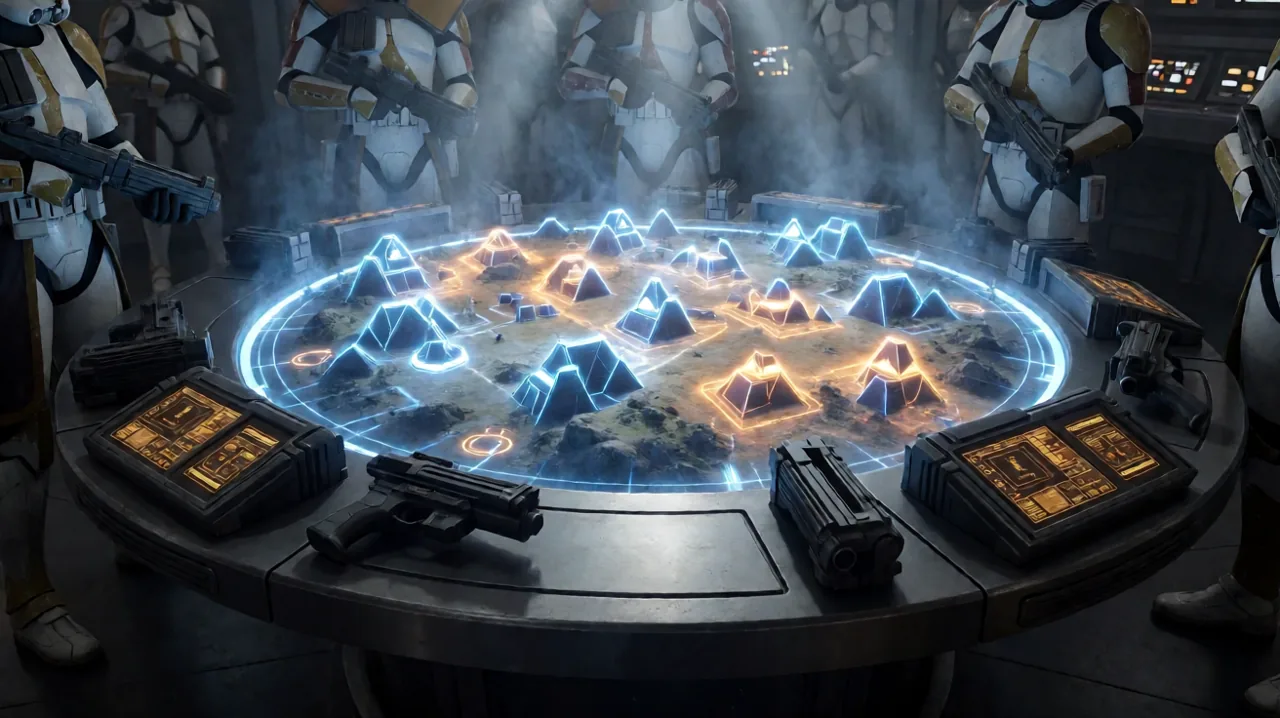
Six weeks out from its late August release, something fascinating is happening across gaming forums and console communities: players who spent their entire gaming lives avoiding turn-based tactics are suddenly declaring themselves converts.
For over a decade, grid-based tactical strategy occupied a respected but stubborn niche. Mainstream console audiences frequently viewed the genre as intimidating, defined by punishing spreadsheet menus, slow-paced turns, and the infamous meme of missing a 95% shotgun blast at point-blank range.
Yet discussions across Reddit communities like r/TurnBasedLovers and r/playstation highlight a major shift. Lifelong action fans who picked up Star Wars Zero Company out of brand curiosity or positive word-of-mouth are discovering that tactical turn-based combat can be fast, cinematic, and deeply rewarding. Instead of bouncing off the grid, newcomers are clearing 40-hour campaigns and actively looking for what to play next.
At the same time, mainstream outlets like Metro UK have published detailed features examining why the Star Wars gaming label is suddenly excelling by breathing new life into dormant or under-served genres. Between Zero Company reviving squad tactics and upcoming titles taking on arcade pod racing, tactical strategy is enjoying an undeniable renaissance.
The Lucasfilm Playbook: Breathing Life into Dormant Genres
A common critique leveled against modern AAA development is risk aversion. For years, major licensed intellectual properties were funneled almost exclusively into third-person action-adventure sandboxes or multiplayer live-service shooters. While those formats have their place, they often leave classic, beloved genres underserved.
In a recent reader feature published by Metro UK, the author pointed out how effectively Zero Company illustrates the power of letting specialized studios apply premier sci-fi worlds to specific gameplay frameworks. When Electronic Arts and Lucasfilm Games partnered with Bit Reactor—a studio packed with Firaxis veterans who honed their craft on tactical benchmarks—they did not ask them to build another generic shooter. They gave them the resources to modernize the squad tactics formula.
The Clone Wars era (specifically 20 BBY) provides natural narrative framing for turn-based mechanics. Squads taking high-cover behind smoking wreckage, setting up coordinated overwatch fire zones against advancing B1 battle droids, or flanking super battle droids with thermal detonators feel inherently faithful to the fiction. What could have felt like an abstract math problem on a grid becomes an authentic tactical firefight.
Why Skeptics Are Biting: Pacing over Pen-and-Paper Frustration
So why did Zero Company succeed in converting skeptical action fans where other strategy titles stalled? The answer lies in how Bit Reactor addressed the biggest friction points that historically alienated casual players.
1. The Dynamic 3-Action-Point Economy
Traditional turn-based combat often locked soldiers into a rigid two-action binary: move once, fire once, and end turn. If you moved a tile too far, your attack was forfeit. If you fired your weapon, your movement ended immediately.
Zero Company sidestepped this stiffness by implementing a fluid 3-Action-Point (3-AP) economy. As broken down in our combat tactics guide, players have the freedom to dash into cover for one point, fire an uncharged blaster carbine for a second, and spend their third point on a tactical stim, a quick reposition, or an overwatch stance. This flexibility mirrors modern action games, allowing newcomers to experiment with aggressive maneuvers rather than cowering in place out of fear of wasting a turn.
2. Eliminating the Point-Blank Miss
Few things drive a casual player away faster than watching an operative miss an enemy standing two feet away. Bit Reactor decoupled hit calculations from pure random-number-generator misery. Positioning and flanking matter far more than hidden background dice rolls:
- Flanking an enemy out of cover provides reliable, critical hit opportunities.
- Full cover reliably mitigates incoming energy damage rather than feeling like cardboard.
- Heavy suppression acts as an actual battlefield tool, pinning down dangerous targets instead of relying on lucky shots.
For players coming in fresh, following a solid beginner guide quickly demonstrates that mistakes stem from reckless positioning rather than unfair RNG.
3. Squad Synergy over Complex Math
Rather than burying players under dense sub-menus, the tactical depth comes from operative interactions. Pairing a heavy Vanguard with a nimble Scout or a Force-sensitive operative creates natural, observable combat loops. When a Vanguard suppresses a bunker, the Scout can immediately trigger an assisted flanking shot.
Building an effective roster through our best squad composition and studying the all classes guide feels intuitive because the classes behave exactly as their battlefield roles suggest.
The Denab Drifter: Tactical Breathing Room Between the Frontlines
Combat is only half the reason players are hooked. The downtime spent aboard the squad’s mobile starship base—The Den—provides a crucial narrative anchor that balances out brutal tactical operations on Felucia, Christophsis, and Umbara.
Interestingly, technical enthusiasts on r/StarWarsShips recently analyzed a massive community model showcasing the starship’s intricate exterior: The Denab Drifter (the full design designation of The Den). The nearly 12-million-polygon asset reveals heavy forward armor plating, repurposed gunship deployment bays, and rugged sublight engines built to evade Separatist blockades.
Inside this drifting war room, players manage equipment research, assign operative treatment, and resolve squad dialogue. Because operative mortality is a persistent tension (especially when learning how permadeath works), spending time customizing armor, tweaking weapon modifications, and unlocking synergy perks turns faceless units into valued comrades. This loop provides the exact psychological breather needed before launching another high-stakes deployment against Kundri Fathom’s forces.
The Post-Zero Company Reading List: Where Newcomers Go Next
For players who just wrapped up their first campaign as Commander Hawks and find themselves craving more grid-based action, the natural question is: where do you go from here?
Our dedicated breakdown of games like Zero Company and the comprehensive Zero Company vs XCOM comparison outline how the landscape stacks up. For those looking to continue their journey, several titles stand out:
- XCOM 2: War of the Chosen: The undisputed benchmark of the modern genre. It is significantly more punishing than Zero Company, with unforgiving hit percentages and relentless strategic layer timers, but it offers unmatched modding depth and nail-biting emergent drama.
- Marvel’s Midnight Suns: Built by the same Firaxis veterans who influenced Bit Reactor’s leadership. While it swaps grid movement for card-based ability drafting, its emphasis on base-hub relationships and cinematic superhero maneuvers offers a similar hybrid of tactical planning and character storytelling.
- Gears Tactics: A fantastic stepping stone for console and gamepad users. Like Zero Company, it abandons rigid grid movement in favor of a generous action-point pool, rewarding aggressive flanking and execution chains.
- Warhammer 40,000: Chaos Gate - Daemonhunters: A squad-focused tactical RPG featuring environmental destruction, targeted limb shots, and heavy melee emphasis, ideal for players who enjoyed frontline operative builds.
Reviewing our updated class tier list can also help players appreciate how Zero Company balances diverse combat styles compared to its genre peers.
Sustaining the Momentum
The sudden surge of interest in turn-based strategy is not going unnoticed by the developers. PC Gamer recently reported that Bit Reactor has begun recalling previously furloughed staff members to ensure long-term support for Zero Company.
With the game crossing major sales milestones on PC and maintaining a vibrant player base on PlayStation 5 and Xbox Series X|S, the studio’s immediate focus remains on polishing balance, squash remaining edge-case bugs, and gathering data on mid-to-late campaign pacing. While official DLC storylines or brand-new planetary sectors remain unannounced for now, the return of development muscle suggests that Hawks’ campaign across the Clone Wars will not be left as a standalone effort.
Star Wars Zero Company proved that tactical combat does not need to compromise its depth to capture a broad audience. By trimming away archaic frustration, prioritizing fluid 3-AP action, and embedding the experience within an authentic Clone Wars frontline, Bit Reactor has introduced an entire wave of console and action gamers to the enduring satisfaction of turn-based tactics.
Sources
- Metro UK: Why is Star Wars suddenly so good at video games? – Reader’s Feature
- Reddit r/TurnBasedLovers: Star Wars Zero Company has me hooked on turn-based strategy games
- Reddit r/playstation: Zero Company has me hooked on turn-based strategy games
- Reddit r/StarWarsShips: Star Wars Zero Company — The Denab Drifter (aka ‘The Den’)
- PC Gamer (via Google News): The studio behind Star Wars Zero Company is bringing back some of its furloughed staff
Sources
- Metro UK - Why is Star Wars suddenly so good at video games?
- Reddit r/TurnBasedLovers - Zero Company Strategy Discussion
- Reddit r/playstation - Zero Company Hooked Console Players on Tactics
- Reddit r/StarWarsShips - The Denab Drifter 12M Poly Model Breakdown
- PC Gamer - Bit Reactor Recalls Staff for Zero Company