
Beyond the Screen: Zero Company's PC Dominance and the Rise of Custom Tabletop Miniatures
With an estimated 650,000 Steam copies sold, Star Wars Zero Company is dominating on PC and inspiring fans to sculpt physical miniatures of their custom Hawks.
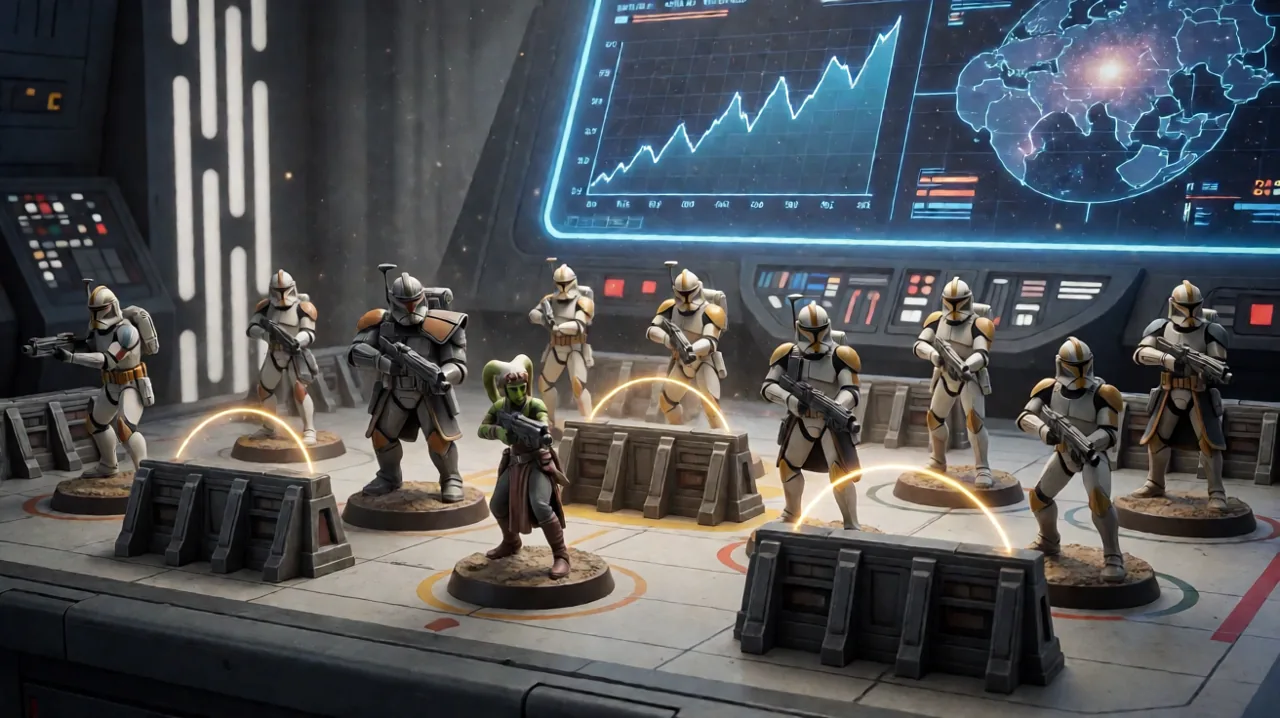
Three weeks after Bit Reactor unleashed their highly anticipated tactical RPG onto the world, the dust is finally beginning to settle on the battlefields of the Clone Wars. We already knew that the August 27 launch was a watershed moment for publisher Electronic Arts and Lucasfilm Games, marking a triumphant return to a niche genre that many publishers had deemed too risky. However, recent data estimates and an explosion of physical fan creations are painting a fascinating picture of exactly who is playing Star Wars Zero Company, and how deeply the game is resonating with a very specific, fiercely dedicated demographic.
From staggering reported sales figures on PC to veteran tabletop players sculpting physical representations of their digital squads, it is clear that the war against Kundri Fathom has transcended the confines of standard video game discourse.
The $28 Million Question: Why PC Players are Flocking to the Den
While Zero Company launched simultaneously across PC, PlayStation 5, and Xbox Series X|S, the community has noticed a distinct skew in where the player base resides. According to newly circulated third-party estimates on the r/StarWarsBlogs subreddit, the game has reportedly moved around 650,000 copies on Steam alone during its initial launch window in August. These community-reported metrics suggest a gross revenue of over $28.21 million strictly from the Steam marketplace in just its first five days.
For a genre that traditionally does not pull the massive mainstream numbers of a first-person shooter or an open-world action-adventure game, these are monumental figures. But the part that has analysts and fans talking is just how PC-heavy the launch appears to have been compared with the console versions.
Why is the PC platform dominating the Galactic Republic’s latest war effort? The answer lies in the genre’s deeply entrenched roots and the mechanical complexity of Bit Reactor’s design. Turn-based strategy titles, especially those utilizing grid-based movement and complex line-of-sight calculations, have always thrived on mouse and keyboard setups. If you want a deeper look at how the mechanics compare to genre titans, our games like Zero Company and Zero Company vs XCOM breakdowns provide extensive context.
When you are directing a squad of diverse operatives through the dense, vertical fungus forests of Felucia, the ability to rapidly flick across the tactical map to check flanking angles is paramount. The game relies heavily on its unique 3-AP (Action Point) system, where precision is everything. Setting up a highly coordinated overwatch trap—perhaps placing a heavy clone trooper on suppression duty while your scout maneuvers into a flanking position—feels inherently native to a mouse interface. The UI in the Den, your squad’s underground base of operations, is dense with weapon modifications, operative recruitment dossiers, and intel management. Navigating these menus, swapping out thermal detonators, and adjusting the faded paint on your armor simply clicks perfectly with a PC audience that has spent decades mastering complex strategy UIs.
From Digital Operatives to Physical Miniatures: The Tabletop Connection
Perhaps the most fascinating byproduct of this PC-centric tactical renaissance is how it is bleeding over into physical hobbies. The deep roster of recruits and the extensive customization options have made players incredibly attached to their specific version of the “Zero Company.” This attachment has sparked a unique movement within the community: bringing these digital operatives into the physical world.
Recently, a user on the r/ZeroCompany subreddit showcased a breathtaking, hand-sculpted, and meticulously painted miniature of their custom protagonist, Hawks. The creator noted that they used to be an avid player of the physical tabletop game Star Wars: Legion but had abandoned the hobby when their local scene died down. Playing Zero Company via EA Play Pro reignited their passion for the franchise’s military aesthetic, prompting them to break out the green stuff and acrylic paints once more.
The miniature in question depicts Hawks not as the default human, but as a Twi’lek gunslinger—a highly effective build we have highlighted in our all classes guide and our dedicated species guide. To match their exact in-game loadout, the creator swapped out standard miniature blaster models to equip their Hawks with an A280 CFE blaster rifle, even going so far as to sculpt a heavy pistol tucked neatly into a thigh holster. They also made minor alterations to the standard in-game outfit to reflect the unique scars and armor wear their character acquired during early campaigns on Ryloth.
This level of dedication speaks volumes about the emotional weight of the game’s mechanics. Because you hand-pick mercenaries from across the galaxy—mixing grizzled clones, rogue Jedi, and various alien species—and manage their relationships, your squad feels distinctly yours. When you combine this deep customization with the looming threat of permadeath (which you can learn how to manage in our how permadeath works guide), every operative becomes a treasured asset. It is no surprise that tabletop veterans are feeling inspired to memorialize their best squads in resin and plastic.
Fueling the Real-Time Tactics Debate
The massive success of Zero Company’s turn-based formula has inadvertently sparked a lively debate about what the franchise should tackle next. While Bit Reactor has perfectly captured the deliberate, chess-like pacing of 20 BBY warfare, a vocal segment of the community is now arguing that the market is ripe for a Real-Time Tactics (RTT) Star Wars game, akin to Company of Heroes or Iron Harvest.
Discussions are circulating regarding how an RTT game could complement the current turn-based offering. Fans point out that while classic titles like Empire At War handled grand Real-Time Strategy (macro-level economy and massive unit spam), an RTT game would focus purely on micro-intensive zone control. Community theorycrafters have already begun conceptualizing asymmetrical factions. For instance, the Grand Army of the Republic could function as a high-quality, low-quantity faction requiring intense micromanagement of veteran clone squads to utilize cover effectively, while the Separatist CIS would rely on sheer numerical superiority to overwhelm defensive positions.
While Zero Company is strictly turn-based, the fact that its success is generating such detailed, passionate design documents from the community proves that Bit Reactor has successfully awakened a sleeping giant: the hardcore Star Wars strategy fandom.
Audial Atmosphere and Lore Integrations
Beyond the tactical gameplay, the presentation of the game continues to draw high praise. It was recently highlighted that composer Gordy Haab has achieved an incredible milestone, having scored two major Star Wars releases in roughly 40 days. Haab, who handled the sweeping, military-drama tracks for Zero Company, was recently confirmed as the composer for the upcoming Galactic Racer. His ability to pivot from the grim, oppressive tension of an Umbara night mission to the high-octane adrenaline of arcade racing solidifies him as one of the defining musical voices of modern Star Wars gaming. The soundtrack perfectly underscores the tension of moving your operatives from cover to cover, knowing that a single misstep could result in a permanent casualty.
Furthermore, the game’s integration into the wider lore of 20 BBY is receiving mainstream media attention. Major outlets like Kotaku have recently published articles praising the game for containing “one of the coolest Star Wars cameos ever.” While we will avoid major spoilers here, the way Bit Reactor handles established characters—treating them as awe-inspiring forces of nature rather than easily manipulated chess pieces—has been widely praised. If you are curious about how these iconic characters impact the campaign, be sure to check out our Anakin Skywalker cameo breakdown for the full details.
The Future of the Den
As we move past the launch window and players continue to optimize their best squad compositions, it is evident that Star Wars Zero Company is more than just a fleeting trend. The estimated $28 million Steam launch proves the financial viability of deep, unapologetic tactical RPGs on PC. Meanwhile, the players spending their evenings carefully painting Twi’lek miniatures prove that the game has captured the hearts of a community that values deep customization and narrative ownership.
Whether you are barking orders from a digital command center or dreaming of rolling physical dice on a tabletop version of Christophsis, Hawks and the Zero Company have firmly entrenched themselves in the tactical gaming landscape.
Sources
- Reddit: Zero Company reportedly made $28.21m on Steam in just five days
- Reddit: Sculpted and painted my Hawks
- Reddit: With the success of Zero Company, what would you say to a real-time tactics game...
- Reddit: Gordy Haab has now scored two Star Wars games in roughly 40 days
- Kotaku: Star Wars: Zero Company Contains One Of The Coolest Star Wars Cameos Ever