
Star Wars Zero Company Lore Discoveries: Trilla's Cameo, Trick's Backstory, and Armor Inaccuracies
From post-Order 66 continuity errors to the tragic bond between Trick and Luco, here are the hidden lore details fans have uncovered in Zero Company.
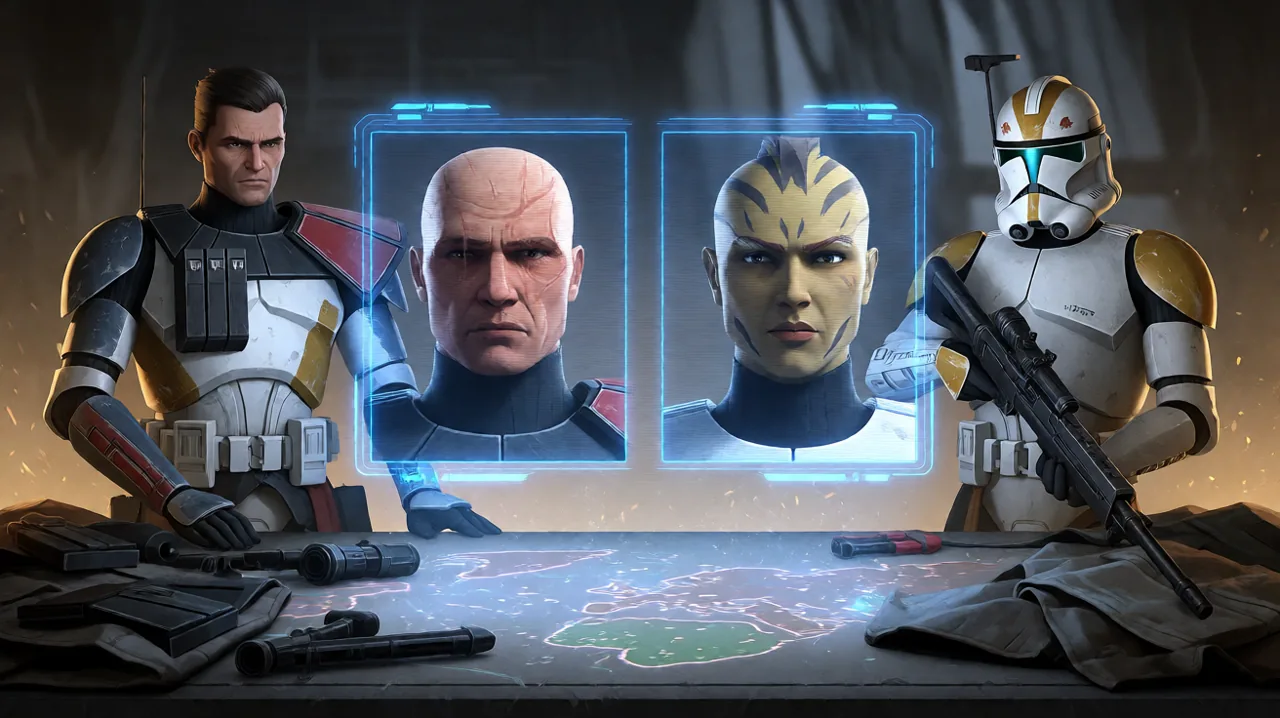
Now that the launch dust has settled and thousands of commanders have established their forward operating bases in the Den, the player base of Star Wars Zero Company is moving beyond basic mechanics. While the early days were dominated by optimizing action points, discovering the best cover angles, and mastering the overwatch trap against overwhelming droid forces, the community has now shifted its focus toward the game’s rich narrative tissue.
Bit Reactor’s tactical RPG (currently pushing high concurrent player counts on Steam, app id 2075800, as well as PS5 and Xbox Series X|S) is fundamentally a game about survival and managing a ragtag group of mercenaries during one of the darkest eras in galactic history. As players push through the 30-40 hour campaign, the deep lore cuts, intricate character backgrounds, and occasional continuity errors are surfacing on community forums.
From the tragic brotherhood of unique operatives to cross-game timeline discrepancies, here is a breakdown of the most fascinating narrative and lore details players have uncovered.
Editor’s Note: This article contains massive narrative spoilers for the mid-to-late campaign of Zero Company.
The 18 BBY Time Jump and Trilla’s Unexpected Cameo
We already knew from the Story and Setting previews that Zero Company kicks off during the Clone Wars around 20 BBY. What Bit Reactor kept tightly under wraps was exactly how the game handles the transition into the Imperial era.
Midway through the campaign, players are forced to navigate the immediate fallout of Order 66. It is a brutal, high-stakes tactical mission where previous alliances crumble, and your primary goal is simply extraction rather than victory. Following this harrowing sequence, the game implements a hard time jump of exactly one year. You know the exact timeframe because Hawks and the surviving operatives can listen to an atmospheric Imperial broadcast in the Den celebrating the very first Empire Day.
This firmly places the second half of the game in 18 BBY, leading to one of the most talked-about encounters: a run-in with Trilla Suduri, widely known as the Second Sister from Respawn’s Jedi: Fallen Order.
However, hardcore lore enthusiasts immediately noticed a fascinating continuity ripple caused by this appearance. In Zero Company, Bit Reactor painstakingly adheres to the timeline by outfitting the Imperial forces with TK armor—the bulky, transitional gear used before the iconic Stormtrooper armor was fully mass-produced. Yet, in Fallen Order, the flashbacks depicting Trilla’s torture and conversion into an Inquisitor clearly show classic Stormtroopers in the background.
Since her conversion had to happen prior to her fully established role in 18 BBY, the presence of classic Stormtrooper armor in the Respawn title technically contradicts the timeline established here. It is a minor visual error in the grand scheme of the franchise, but it highlights just how closely the Zero Company developers adhered to the canon phase-out of the clone army.
Brothers in Arms: The Tragic Bond of Trick and Luco
Zero Company leans heavily into character relationships, rewarding players who keep their squad compositions consistent. But beyond the statistical synergies and class combinations, the written backstories for these operatives are genuinely affecting.
The community has universally gravitated toward the dynamic between two specific operatives: Trick and Luco.
Trick is a former clone trooper who suffered a severe Traumatic Brain Injury (TBI) while saving Commander Hawks’ life earlier in the timeline. Released from service due to his condition, he finds a renewed sense of purpose within the ranks of the mercenaries. Later in the campaign, players can recruit Luco, a highly lethal sniper hailing from Umbara.
Anyone familiar with the Clone Wars knows that the Umbarans violently seceded from the Republic, leading to one of the most grueling planetary invasions of the entire war. The fact that a former Republic clone and an Umbaran separatist are forced to share the same dropship creates incredible narrative tension.
The “enemies to brothers-in-arms” trope is handled masterfully here. On the battlefield, utilizing Luco’s long-range sniper class abilities to cover Trick while he flanks enemy positions creates a mechanical synergy that perfectly mirrors their growing mutual respect. Because of the game’s punishing permadeath mechanics (you can read more on how permadeath works here), losing either of these characters after watching their relationship develop in the Den hits incredibly hard. It is a testament to the writers that they managed to evoke such strong emotions without relying on existing legacy heroes.
The ARC Trooper Armor Debate
Not all community discoveries revolve around heavy narrative themes; some are strictly a matter of intergalactic fashion. The customization suite in the Den allows players to outfit their operatives in a massive array of faded, battle-damaged armor pieces retrieved from battlefields like Ryloth, Geonosis, and Christophsis.
Players who picked up the Deluxe Edition gained access to a specific set of cosmetics labeled as “Phase II ARC Trooper” gear. It did not take long for the community’s keenest eyes to point out that the game’s naming convention is technically inaccurate.
The helmet included in the package features the distinct central fin, combined with the T-visor and specialized breathing apparatus. As many fans on Reddit have pointed out, this is actually the Phase I ARC Trooper helmet (colloquially referred to by fans as the “Phase 1.5” design), which was utilized by standard ARC troopers early in the war. True Phase II ARC helmets lack the pronounced top fin.
Additionally, fans have begun debating the exact rendering and physics of the Kama (the armored skirt worn by ARC troopers and commanders), pointing out slight inaccuracies in how it drapes compared to canon reference materials. Some users speculate that Bit Reactor may have modified an existing mesh from DICE’s Star Wars Battlefront II to save on development time for the cosmetic pack. Regardless of how the asset was created, the fact that the player base is dissecting armor fins down to the millimeter proves that the crossover audience of strategy veterans and Star Wars loyalists is as passionate as it gets.
Modding the Pain: Pushing for XCOM 2 Depth
While the narrative and character dynamics are receiving universal praise—with outlets noting how the teamwork focus creates a refreshing gameplay loop—the mechanical depth of the tactical combat is still a point of debate.
For many, Zero Company is the perfect modern tactics game. The 3 Action Point system allows for fluid movement, shooting, and ability usage that feels distinctly heroic. However, a vocal segment of hardcore strategy veterans feels the vanilla game lacks the spreadsheet-level punishment of XCOM 2.
Despite early reports that the game would not feature official mod support, the PC community is already finding workarounds. Reports indicate that players are actively trying to overhaul the game’s injury mechanics. In the vanilla experience, operatives who take damage usually bounce back after a short stint in the Den’s medical bay. Modders are currently attempting to script long-term, lingering debuffs for operatives who take critical hits or get flanked out of cover, aiming to recreate the brutal logistical nightmare seen in XCOM 2 overhaul mods like Covert Infiltration.
Whether you are here for the meticulous lore building, the emotional character arcs of your diverse alien operatives, or the thrill of executing a flawless tactical breach, Zero Company has given the community plenty to chew on. As players continue to map out every corner of the campaign’s 150+ operational zones, it is highly likely we will see even more hidden lore details surface in the coming weeks.