
Bridging Two Fandoms: Why Strategy and Lore Veterans Are Uniting for Star Wars: Zero Company
As the August 27 release approaches, community discussions reveal a fascinating 50/50 split in why players are hyped for Bit Reactor's Clone Wars tactical RPG.
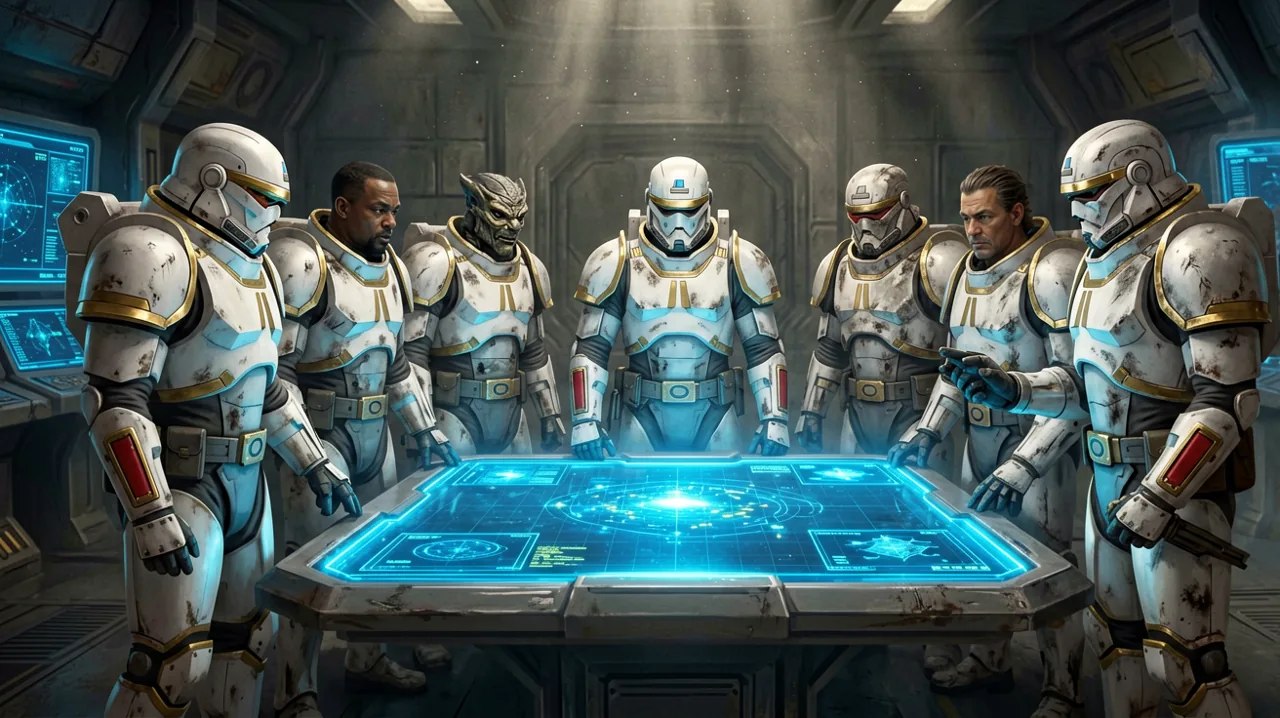
Dominating the August 2026 Strategy Landscape
August 2026 is rapidly shaping up to be a landmark month for fans of turn-based strategy, and the conversation is being entirely dominated by one massive release: STAR WARS Zero Company. Scheduled to launch on August 27 for PC (via Steam, app ID 2075800), PlayStation 5, and Xbox Series X|S, this ambitious collaboration between Bit Reactor, Respawn Entertainment, and Lucasfilm Games is casting a long shadow over the rest of the gaming calendar. In recent industry roundups, specialized strategy gaming outlets have noted that the title is essentially suffocating the competition. Turn-based enthusiasts are holding their breath, hoarding their vacation days, and prepping their rigs for what promises to be a genre-defining experience.
But what is truly fascinating about the unprecedented anticipation surrounding the upcoming August 27 release isn’t just the sheer volume of hype—it is the unique composition of the community generating it. Bit Reactor has seemingly achieved the impossible by uniting two entirely different demographics under one banner.
The Community Divide: Story vs. Mechanics
A recent discussion thread on the official Zero Company subreddit provided a revealing snapshot of the player base, posing a simple question: what actually drew you to the game? The responses highlighted a remarkable dichotomy. For a licensed title, one might expect the vast majority of players to be lured purely by the intellectual property—the established lore, the setting, the familiar vehicles and factions. Yet, the community feedback paints a very different picture.
A massive contingent of fans reported that their excitement is split almost exactly 50/50 between the narrative potential of the Clone Wars setting and the hardcore, unforgiving tactical gameplay promised by the developers. It is incredibly rare for a major franchise game to attract genre purists purely on the strength of its mechanical depth, but Zero Company appears to be achieving exactly that. The studio is successfully bridging two notoriously demanding fandoms: the lore aficionados who scrutinize every detail of the timeline, and the turn-based tacticians who demand rigorous, balanced, and punishing strategic systems.
The Narrative Draw: Gritty Clone Wars Realism
For the narrative-focused half of the player base, the primary draw is a deep, immersive plunge into the gritty reality of the Clone Wars. Set in 20 BBY, arguably the most intense phase of the galactic conflict, the game completely sidesteps the traditional power fantasies associated with lightsabers and space magic in favor of mud, blaster fire, and the bonds of squadhood. As we outlined in our story and setting breakdown, players will step into the boots of Commander Hawks, a highly customizable protagonist tasked with assembling and leading “Zero Company”—an elite, irregular unit of operatives operating from a clandestine base known as the Den.
The community is buzzing with anticipation for a storyline that takes the conflict seriously, pitting Hawks and their squad against a formidable new antagonist, Kundri Fathom. The promise of deploying across a massive variety of iconic and dangerous planets is a massive hook. Fans are eager to navigate the shattering crystalline landscapes of Christophsis, endure the scorching red deserts of Geonosis, survive the treacherous, towering fungal jungles of Felucia, push through the rugged canyons of Ryloth, and brave the claustrophobic, shadowy darkness of Umbara. For these players, the game is a vehicle to experience the Clone Wars from the ground up, not as invincible heroes fighting on the holovids, but as vulnerable, mortal soldiers fighting a grueling war of attrition where every victory comes at a cost.
The Tactical Hook: Cover, Overwatch, and Permadeath
Conversely, the strategy veterans are drawn to Zero Company for entirely different reasons: the promise of deep, uncompromising, turn-based combat mechanics. For this demographic, the recognizable branding is just a nice coat of paint layered over what looks to be a remarkably robust XCOM-like engine. The core gameplay loop heavily emphasizes spatial awareness, precise positioning, and careful resource management.
Players will need to meticulously utilize environmental cover to protect their operatives from incoming fire, carefully managing lines of sight and firing angles to maintain a defensive advantage. The overwatch mechanic will be crucial for establishing kill zones and controlling the battlefield, allowing players to punish advancing enemy units or intercept flankers during the opposing turn. But static defense won’t be enough to achieve victory; aggressive flanking maneuvers will be strictly required to break enemy entrenchments, bypass heavy armor plating, and secure critical damage modifiers.
Every action point must be spent with deliberate intent. Mismanaging your squad’s movement or failing to calculate the mathematical odds of a crucial blaster shot could lead to disastrous consequences. This tension is magnified exponentially by the inclusion of a punishing permadeath system, a core mechanic that ensures that every tactical error has permanent, campaign-altering repercussions. When an operative falls in combat, they are gone forever, taking their accumulated experience, specialized upgraded skills, and the player’s hard-earned emotional investment with them to the grave.
The Den: Where Strategy Meets Story
The true genius of Zero Company seems to lie in how these two disparate elements—narrative immersion and tactical rigor—intersect and feed into one another, most notably through the game’s class system and squad synergy. Recruiting operatives from across the galaxy means you aren’t just managing generic, faceless soldiers; you are assembling a highly specialized, diverse species team of clones, mercenaries, and survivalists, each bringing unique abilities and cultural backgrounds to the field.
The community is already deeply engaged in theorycrafting potential squad compositions. Players are actively debating the merits of combining a heavy weapons specialist who can suppress enemy positions with a highly mobile scout class designed for brutal, close-quarters flanking attacks. This synergy extends directly into the downtime between missions.
The Den is not just a sterile menu screen; it is the living, breathing heart of your operations. Here, players will spend their hard-earned battlefield resources to upgrade weapons, craft advanced armor plating, and unlock new tactical gear. Deciding whether to invest in improved holotargeting optics for your snipers or heavier shielding for your front-line breachers is simultaneously a narrative roleplaying choice and a strict tactical imperative. Upgrading your operatives is deeply tied to their survival on the battlefield, making the base management mechanics at the Den just as stressful, engaging, and critical to your success as the actual boots-on-the-ground combat.
Looking Ahead to August 27
This delicate balancing act is exactly why Star Wars: Zero Company is generating such massive waves as its late August release date approaches. Bit Reactor isn’t just making another licensed cash-grab, and they aren’t just making a sterile, spreadsheet-driven tactical simulator. By committing wholeheartedly to both a rich, authentic Clone Wars narrative and a deeply rewarding, unforgiving strategic sandbox, they are successfully courting a massive, unified audience.
As players finalize their pre-orders across various storefronts and double-check their PC system requirements for the impending Steam launch, the passionate debate over what is most exciting about the game will undoubtedly continue on forums and social media. But whether you are here to uncover the dark mysteries of Kundri Fathom’s plot, or you are simply looking to execute the perfect, mathematically flawless flanking maneuver on an unsuspecting squad of enemy droids, Zero Company appears ready and willing to deliver on all fronts.