
The Bittersweet Launch of Zero Company: Record-Breaking Reviews, Brutal Campaigns, and Developer Furloughs
Star Wars Zero Company secures record-high review scores and massive player counts, but reports of heavy staff furloughs at Bit Reactor cast a shadow over its launch week.
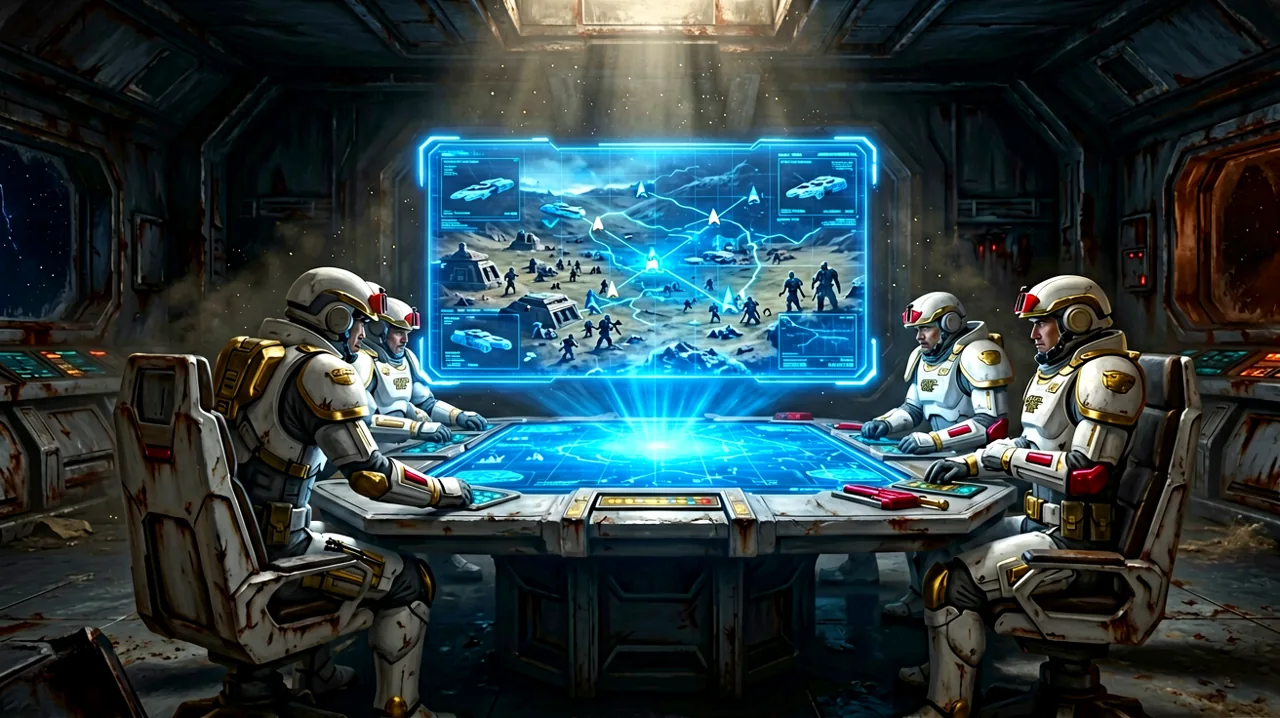
The first week of Star Wars Zero Company has been an emotional rollercoaster for the strategy gaming community. On one hand, Bit Reactor has delivered what is arguably the most robust turn-based tactical experience of the year. Players are leading Commander Hawks and their customized squad across the galaxy, executing flawless overwatch traps, and agonizing over permadeath consequences. Yet, the celebratory mood among fans has been heavily dampened by sobering industry news regarding the studio’s internal stability and the developers who made this launch possible.
The Elephant in the Room: Bit Reactor’s Staffing Crisis
Before analyzing the intricacies of the campaign and the community’s recent lore discoveries, it is necessary to address the reality of the game’s development team. According to multiple reports surfacing over the past 24 hours, as many as 80% of Bit Reactor’s staff were placed on unpaid leave in the weeks leading up to the game’s August 27 launch.
This financial restructuring was reportedly executed before the review embargo lifted. For context, Zero Company has become the highest-rated Star Wars title at launch on Metacritic since Knights of the Old Republic II in 2004. It is currently dominating the top seller charts on Steam (App ID 2075800), drawing in both hardcore strategy veterans and narrative enthusiasts. The fact that the developers who poured their passion into this massive project are technically still employed but not receiving pay is a bitter reality for the community to accept.
Currently, a “skeleton crew” reportedly remains active, primarily handling post-launch optimization, minor bugs, and server stability. Former Bit Reactor developer Zachariah Scott has publicly criticized senior management and publishers for celebrating the game’s massive success while the core team remains furloughed. Bit Reactor is also reportedly dealing with an ongoing legal dispute involving former COO Alison Kelly and co-founder Greg Foert.
This situation highlights a frustrating paradox in the modern gaming industry: a studio can deliver a generational tactical masterpiece, fundamentally evolving the genre with its intricate synergy mechanics and deep progression systems, yet still face severe financial restructuring before the community even gets their hands on the final product. It remains unclear what level of commercial success is needed to bring the affected employees back, but for now, players encountering minor UI glitches or hoping for rapid post-launch content roadmap updates should temper their expectations.
A Relentless Campaign: Why You Cannot Stall
For those currently navigating the war effort, the gameplay speaks for itself. One of the most prominent points of discussion on the community forums this week has been the campaign’s pacing and structural urgency. If you are coming from games like Zero Company where you can comfortably delay the main story to grind resources or level up your recruits in safety, you are in for a brutal awakening.
The campaign features a hard, systemic limit on the number of missions you can undertake. The sense of urgency is palpable—much more demanding than in modern XCOM titles. There is simply no way to put major story operations on hold for more than a turn or two while you grind for credits or weapon upgrades in the Den. The game actively punishes passivity; if you refuse to push the objective and instead try to bunker down in heavy cover, the enemy AI, orchestrated by the cunning Kundri Fathom, will overwhelm you with sheer numbers and flanking maneuvers.
When deploying to hostile environments like the crystal canyons of Christophsis or the shadow-drenched surface of Umbara, the pressure is immediate. You cannot afford to waste turns positioning for the perfect shot. The game’s 3-AP (Action Point) system demands efficiency. You must balance moving into heavy cover, setting up overlapping fields of overwatch fire, and utilizing class-specific skills within a strict time limit.
This relentless pace ties directly into the game’s demanding achievement hunting. Early reports from the completionist community suggest that unlocking 100% of the game’s achievements will require at least two full playthroughs. One of these runs must be completed on Ironman mode, which removes the safety net of manual saves. If you make a tactical error and lose your best heavy gunner to a thermal detonator, you have to live with the brutal reality of how permadeath works.
Managing Toxic Squad Relationships
Beyond merely surviving firefights, players are discovering that managing the psychological state and relationships between Operatives is an incredibly demanding task. The game features a dynamic relationship system where characters form bonds—or intense rivalries—based on their species, personal backgrounds, and specific actions taken in combat.
One particularly notorious achievement tasks players with maximizing the relationship meter between two Operatives who canonically hate each other. On harder difficulties, achieving this feels nearly impossible. You have to constantly deploy them together, ensuring they score synergy kills and assist each other out of tight spots, all while surviving lethal encounters. The tight mission limit means you cannot afford to waste deployments just to farm relationship points; every mission must count toward the larger war effort. If you are struggling with who to pair together, reviewing our best squad composition guide can help you mitigate some of these internal conflicts before they fracture your team dynamics.
Deep Lore Cuts: Ben Burtt’s Galactic Phrase Book
Despite the studio’s current turmoil, the sheer amount of love poured into the game’s world-building is undeniable. The developers did not just rely on standard Wookieepedia searches; they dug deep into the franchise’s historical archives to bring the Clone Wars era to life.
A fantastic detail highlighted by players this week involves the in-game audio barks and alien dialogue. Listening closely during Cycle 7 and beyond, you will hear phrases that originate directly from Ben Burtt’s obscure 2001 release, the Galactic Phrase Book & Travel Guide. For instance, certain characters can be heard yelling “Dopo mee gusha, peedunkey?” (Do you feel lucky, punk?) or referring to enemies as “stoopas” (fools).
Even more impressively, the game respects the linguistic quirks established in that specific book. The phrase book notes that Huttese lacks a direct translation for the phrase “thank you,” reflecting the culture’s entirely transactional nature. In Zero Company, when you deploy Operatives who speak Huttese or deal with Hutt-affiliated NPCs in the Den, this exact cultural trait is referenced in their dialogue. They simply do not have a way to express gratitude, which adds a layer of friction and authenticity to your squad interactions. These are the kinds of details you expect when exploring the story and setting of a prestige RPG, not necessarily a combat-heavy strategy title.
The Economics of War: Venators vs. Lucrehulks
Another incredible piece of world-building occurs during the quiet downtime in the Den. Players have noted a specific conversation between Operatives Bennic Halloren, Runa Blask, and the player character, Hawks, regarding the Ossic Hand—a Lucrehulk-class battleship operated by the Separatists.
In the exchange, Bennic criticizes the Confederate Navy for simply slapping heavy weapons onto a retrofitted cargo ship, to which Runa retorts, “Waste not want not. Okay, do you have any idea how much a Jedi cruiser costs?”
This single line of dialogue prompted the community to run the numbers based on established universe lore. A Republic Venator-class Star Destroyer is estimated to cost around 59 million credits, whereas a Lucrehulk-class battleship costs roughly 500 million credits. The math reveals that for the price of a single Lucrehulk, the Republic could theoretically field eight Venators. This raises fascinating tactical questions about the Separatist war machine that you face on the ground. It is a testament to the writing team that a throwaway line about budget logistics can spark massive community debates about the economic feasibility of the Clone Wars.
Customizing Hawks and Reclaiming the Narrative
Finally, while the official marketing has heavily leaned on a specific, canonized look for Commander Hawks—an older human male—the community is actively pushing back by sharing their own unique protagonists. Much like the Commander Shepard phenomenon in Mass Effect, players are taking to forums and social media to post their custom creations. Whether it is a battle-scarred Zabrak, a Twi’lek tactician, or a grizzled clone veteran, the character creator is proving to be a massive hit.
The sheer depth of aesthetic options allows every player’s Hawks to feel distinct. You can equip faded tactical camouflage or specialized environmental gear suited for the fungal jungles of Felucia or the harsh red deserts of Geonosis. The Den acts as the perfect backdrop to showcase these designs, as you walk among your recruits, upgrade energy rifles at the armory, and plan your next move at the holotable.
Fans are even photoshopping their custom Hawks into the official key art, overriding the marketing’s default face. It is a small but meaningful way for the community to take ownership of their Zero Company experience, treating their customized leader as the definitive version of the character.
Looking Ahead
Star Wars Zero Company is a triumph of tactical design and franchise reverence. It forces you to master its AP systems, respect its brutal action economy, and care deeply about the diverse mercenaries under your command. It is a game that absolutely deserves its high praise and strong sales.
However, the reality of the people who built it cannot be ignored. As we continue to document optimized builds, combat tactics, and hidden lore secrets, our thoughts remain with the affected developers at Bit Reactor. We can only hope that the game’s overwhelming commercial and critical success on Steam, PlayStation 5, and Xbox Series X|S will lead to the studio stabilizing and the creative team being rightfully reinstated to continue their incredible work.