
Beyond XCOM: Mastering Zero Company's Bond System, Squad Dynamics, and Avoiding Late-Game Crashes
Discover how Star Wars Zero Company redefines tactical progression with its cooperative Bond System, its Firefly-esque storytelling, and community-reported PS5 crashes you need to avoid.
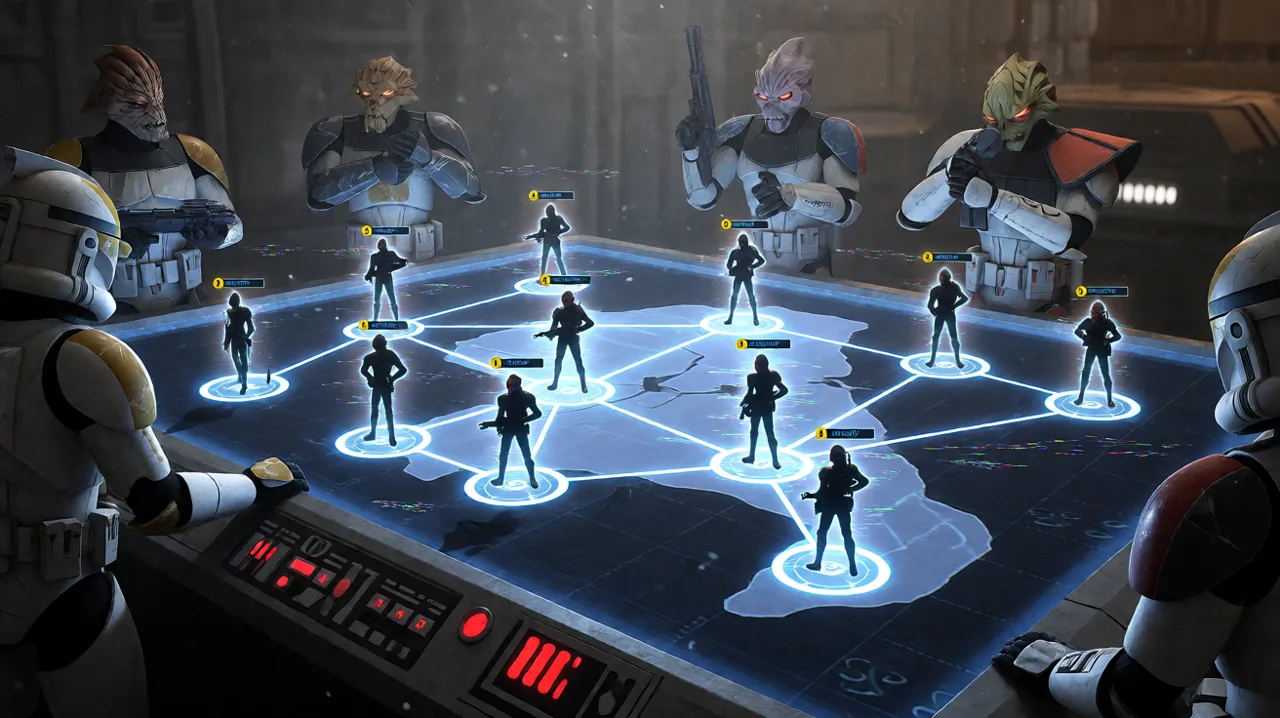
Since its record-breaking launch, Bit Reactor’s Star Wars Zero Company has proven that it is much more than a simple licensed reskin of existing tactical frameworks. While early previews accurately identified the grid-based DNA inherited from its spiritual predecessors, the actual experience of managing your operatives inside the Den feels fundamentally different. The community has spent the past week tearing down the game’s mechanics, discovering massive lore implications, and unfortunately, running headfirst into some severe late-game bugs.
Here is a complete breakdown of how the game’s unique Bond System changes the way you should be playing, the emergent narrative design that has players drawing comparisons to classic sci-fi television, and the critical technical issues you need to navigate to keep your campaign alive.
A Space Western Disguised as a Tactics Game
Critics and community members alike have pointed out that the game captures a very specific, gritty atmosphere rarely seen in modern tactical RPGs. A recent dedicated feature from TheGamer accurately described the experience as “the Firefly game I always wanted,” and it is incredibly easy to see why. You are not commanding untouchable Force wielders or elite, well-supplied Republic battalions backed by endless logistics. Instead, Commander Hawks and his customized crew are scraping by in the criminal underworld and the active warzones of 20 BBY. Every credit earned, every piece of scavenged armor equipped, and every localized skirmish survived genuinely matters.
This ragtag atmosphere bleeds directly into the game’s narrative structure. Unlike traditional RPGs where an operation failure simply means a “Game Over” screen and a quick reload, Zero Company leans heavily into emergent storytelling. When a mission goes sideways, the narrative adapts to your failure. Losing a veteran operative to a lucky critical hit by a B2 Super Battle Droid doesn’t just mean a loss of raw stats; it fundamentally changes the interpersonal dynamic of your surviving crew in the Den. The game actively encourages you to push through these tragic moments rather than save-scumming, letting how permadeath works define the gritty legacy of your personal campaign.
The developers have also injected a wealth of character and rebellious charm into the universe, rewarding players who pay close attention to the little details. For instance, the community recently uncovered an incredible Easter egg during a tense infiltration operation framed around a high-society dinner party. If you actively choose to refuse a toast dedicated to Emperor Palpatine (who is still technically Chancellor at this point in the timeline, making the toast a dark foreshadowing of the Infinite Coil’s true loyalties), the game triggers a brilliant cinematic nod to the Studio Ghibli classic Porco Rosso. It is these small, anti-authoritarian touches that solidify the mercenary vibe of the squad.
Rethinking Progression: Why Bonds Matter More Than Kills
For players coming straight from other grid-based tactical titles, the progression system in Zero Company requires a complete mental reset. If you want to understand the core mechanical differences, our Zero Company vs XCOM overview is a good starting point, but the community is currently laser-focused on one specific divergence: how experience is actually rewarded.
In older tactical games, units typically level up by securing killing blows or merely surviving operations. This heavily flawed system often led to strategies where players would intentionally “feed” weak enemies to a specific sniper or heavy gunner, creating a hyper-lethal carry unit while the rest of the squad lagged behind in power.
Zero Company actively discourages this lone-wolf mentality through its dual progression layers: Focus Points and the Bond System. At the end of a mission, Focus Points are distributed to the squad as a whole, allowing you to fill out individual operative skill trees. However, the true, game-winning engine of progression lies in the Bond System.
You do not build stronger units by having them hoard kills; you build them by forcing them to cooperate. Bond levels between operatives increase dynamically during missions when they perform supportive actions for one another. This includes:
- Healing a critically wounded squadmate under fire
- Providing covering fire or suppression assists
- Applying defensive buffs before a dangerous room breach
- Transferring your own Action Points (AP) to allow an ally to reposition or secure a flank
When a pair of operatives reaches a new Bond tier, the combat rewards are immense. The game grants flat damage boosts, permanent HP increases, extended movement ranges, and massive lumps of bonus Focus Points. This fundamentally shifts the combat tactics guide away from “who has the biggest blaster” to “how can this squad operate as a cohesive puzzle.” You are financially and mechanically incentivized to build the best squad composition focused purely on synergy, support, and tactical overlap.
The Lore Deepens: The Shadow Plague and the Infinite Coil
While tactical discussions dominate the forums, those who have managed to push deep into the late game are uncovering some of the most fascinating lore additions to the Clone Wars era. Zero Company does not just rehash the standard Separatist versus Republic conflict; it introduces a deeply unsettling third-party threat.
Players reaching the final acts of the campaign are finally peeling back the layers on the main antagonist faction, the Infinite Coil. Initially, the game presents the Coil as a hyper-dedicated cult acting as a Separatist-aligned militant fifth column. They seem to operate in the criminal underbellies of various planets, preparing planetary governments for CIS invasion through sabotage. However, as the campaign progresses, the truth becomes far more sinister.
Community lore theorists have begun compiling dialogue cues from the game’s primary antagonist, Kundri Fathom, and your squad’s medical droid, M3-V0. It is heavily implied that the Infinite Coil is not merely a political cult, but a weak hive mind controlled directly by Fathom herself. This terrifying connection is maintained through a biological anomaly known as the Shadow Plague. While Bit Reactor has left the exact origins of the plague slightly ambiguous, M3-V0 draws specific genetic comparisons that suggest it is an engineered weapon rather than a natural outbreak. This shift from a traditional tactical military campaign into borderline cosmic horror demonstrates the writing team’s willingness to take bold risks with the established canon.
Severe Bug Report: PS5 Crashes and Save Wipes
As brilliant as the systemic design and storytelling are, we have to address the major issues currently plaguing the player base. The launch window has been marred by a series of severe technical flaws that are actively destroying campaigns. While minor visual glitches are expected in a dense strategy game, the community has recently identified several game-breaking bugs that you need to be aware of before committing to a grueling weekend session.
The “Behind Enemy Lines” Softlock
Multiple PlayStation 5 users are reporting a consistent, devastating crash associated with the late-game “Behind Enemy Lines” mission. According to player reports, this operation culminates in a grueling boss encounter against an enemy boasting an overwhelming 200 HP pool.
The fight itself is mechanically sound, but the issue occurs immediately after the combat concludes. A heavy story cutscene plays out, but the moment the game attempts to transition to the “Mission Complete” screen, it reportedly hard-crashes to the PS5 dashboard. To make matters worse, the auto-save system fails to trigger after the boss dies but before the crash. Players are loading back in only to find they have to replay the entire hour-long engagement, with no guarantee that it won’t crash a second or third time.
If you are approaching this operation, we highly recommend manually backing up your save to the PlayStation Plus cloud before starting it.
PC Save Deletions and Linux Scaling Issues
The situation on PC is similarly volatile. Several high-profile threads have surfaced detailing a devastating bug that entirely deletes campaign save files without warning. For a game that demands 30 to 40 hours for a single playthrough, losing all your Focus Point grinding and Bond progress to a corrupted file is heartbreaking. The root cause of the save wipe is still unconfirmed, but the frequency of the reports suggests it is not an isolated incident.
Additionally, players attempting to run the game on Ubuntu or via Linux-based systems (outside of standard Steam Deck presets) are running into massive resolution hurdles. Users with 4K monitors are reporting that the game completely breaks when using 125% OS scaling. In fullscreen mode, the internal render resolution reportedly skyrockets to an unmanageable 6000+ pixels, locking the player out of the settings menu entirely. Attempting to use a frameless window mode above 1080p results in extreme pixelation or the game window jumping partially off the monitor. Until an official patch drops, Linux users should stick strictly to standard 1080p windowed mode or verify their setup against our system requirements guide to avoid these UI scaling disasters.
Protecting Your Campaign
Community frustration regarding these bugs is palpable, especially given recent reports of furloughs at the development studio. With post-launch patches desperately needed to stabilize the late-game economy and fix these critical crashes, players are understandably anxious about how quickly a hotfix can be deployed.
For now, our advice is to play cautiously. Enjoy the incredible tactical depth of the Bond System, lean into the ragtag mercenary roleplaying, and uncover the mysteries of the Shadow Plague—but do not trust the auto-save system. Manually backup your files after every successful operation, and keep your squad alive through the turbulent early days of this phenomenal, yet currently flawed, strategic experience.
Sources
- Reddit: Love Zero Company; Hate Many Crashes
- Reddit: Unit Progression in XCOM vs Zero Company
- TheGamer: Star Wars Zero Company Is The Firefly Game I Always Wanted
- Reddit: Porco Rosso reference in Star Wars: Zero Company
- Reddit: Gaming on Ubuntu is a hazzle...
- Reddit: SW Zero Company deleted my save
- Reddit: So what is the Shadow Plague and the Infinite Coil?