
State of Zero Company: Furlough Reports, PC Performance Issues, and the Emerging Dual-Spec Meta
As Zero Company enters its second week, we examine reported studio furloughs, PC performance stutters, and the best dual-specialization squad setups.
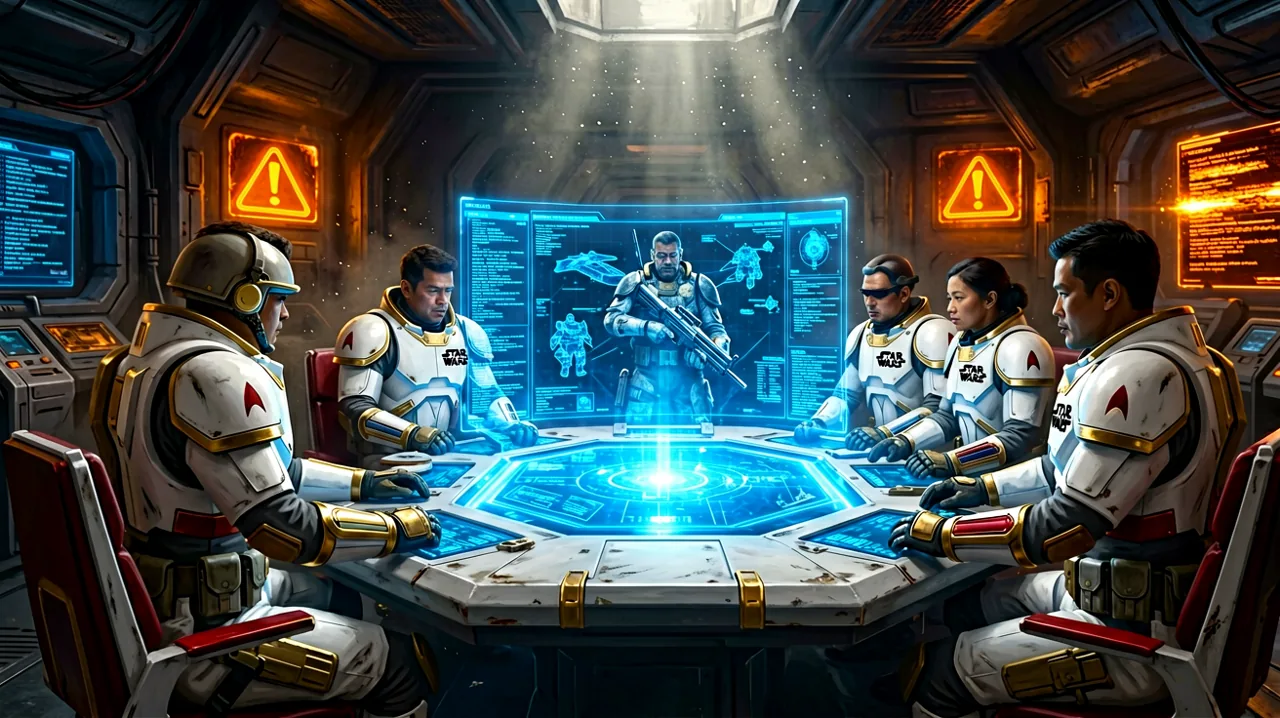
As Star Wars Zero Company wraps up its first full week on the market, the community has had ample time to deeply explore Bit Reactor’s tactical strategy experience. Millions of players are currently optimizing their squads of operatives in the Den, mastering the nuances of cover and overwatch, and exchanging strategies for surviving the grueling planetary campaigns.
However, this post-launch window has not been entirely smooth. Behind the scenes, troubling industry reports suggest severe staffing cuts at the studio, while on the technical front, a vocal portion of the PC community is wrestling with frustrating engine stutters and hard crashes.
This weekly roundup examines the unconfirmed studio furlough rumors, breaks down the latest PC performance hurdles on Unreal Engine 5, and highlights the highly effective dual-specialization meta that strategy veterans are using to dismantle Kundri Fathom’s forces on Expert difficulty.
Bit Reactor Furlough Reports: A Shadow Over Launch
Star Wars Zero Company released on August 27 to incredible fanfare, breaking franchise concurrent player records on Steam and garnering high praise for its faithful adaptation of the Clone Wars era into a turn-based tactical framework. Achieving commercial success in the niche XCOM-like genre is notoriously difficult, making the game’s immediate cultural footprint a massive victory for Bit Reactor, Electronic Arts, and Lucasfilm Games.
Yet, just days after this triumph, multiple outlets and community sleuths reported a sobering development. According to reports circulating from The Movie Blog and international gaming communities, Bit Reactor has allegedly furloughed a significant portion of its staff—reportedly up to 80% of the team.
Industry sources point to broader financial constraints as the driving factor behind this sudden workforce reduction. It is highly unusual for a studio to furlough the vast majority of its workforce immediately following a successful launch, though the 2026 gaming landscape has proven incredibly volatile. As of this writing, Bit Reactor and Electronic Arts have not officially confirmed the furloughs, nor have they clarified the exact number of impacted developers.
For the active player base, this rumor raises immediate concerns regarding the game’s post-launch health. While the developers previously stated they designed a complete 30-40 hour linear campaign without live-service models or battle passes, early technical bugs require a dedicated engineering team to patch. If the core team has indeed been sidelined, the timeline for addressing these critical PC performance issues could stretch far beyond traditional expectations.
PC Performance Woes: RTX Crashes and UE5 Stutters
While PlayStation 5 and Xbox Series X|S commanders are enjoying a relatively stable framerate, the PC version (Steam App ID 2075800) is proving to be a headache for specific hardware setups. Zero Company was built from the ground up on Unreal Engine 5, pushing visual boundaries with detailed environments on planets like Christophsis and Felucia. However, community reports indicate that PC optimization remains a major hurdle.
Two distinct technical issues have dominated support threads over the past week:
- DXGI_ERROR_DEVICE_HUNG Crashes: A widespread issue is actively affecting RTX 4060 Ti users, as well as a handful of other 40-series cards. Players are reporting hard crashes straight to the desktop, accompanied by a generic GPU hung error. These crashes happen unpredictably—sometimes five minutes into an operation, and other times right after a deployment cutscene. Clean driver installations using utilities like DDU have reportedly failed to resolve the issue, pointing to an engine-level instability or memory leak rather than a simple local driver conflict.
- Consistent Rhythmic Stuttering: Players utilizing high-end components, such as the RTX 4070 paired with an Intel i7-13700F, are reporting evenly spaced, rhythmic stutters. These hitches occur regardless of whether graphics are set to Ultra or Low. Monitoring software run by the community reveals that the game frequently experiences sudden dips in 3D GPU activity, and in some instances, the engine utilizes only half of the available VRAM. This behavior strongly suggests UE5 asset streaming bottlenecks or background shader compilation issues, which can brutally break immersion during careful tactical planning.
Until an official patch is deployed—which may be complicated by the aforementioned studio rumors—PC players are advised to ensure their rigs comfortably exceed the baseline expectations outlined in our System Requirements guide. Manually capping your framerate via the NVIDIA Control Panel and temporarily lowering shadow quality may help stabilize frame pacing for the time being.
The Emerging Meta: Best Dual-Specialization Combos
Technical issues aside, the tactical layer of Zero Company is thriving. Players who have successfully rolled credits on the game are freely sharing their optimized builds, revealing that the dual-specialization system is where the true strategic depth lies. Customizing your operatives in the Den isn’t just about equipping incredibly detailed ARC Trooper or Clone Commando armor; it’s about finding class synergies that manipulate the action point (AP) economy.
The Sharpshooter / Gunslinger Synergy
A massive portion of the community is opting to run their customized protagonist, Hawks, with a hybrid Sharpshooter and Gunslinger build. Traditionally, the Gunslinger specializes in high mobility and close-quarters flanking maneuvers, while the Sharpshooter locks down lanes from high cover at a distance.
By combining them and equipping a high-tier Longarm weapon, Hawks becomes a versatile battlefield anchor. Fully upgraded, this build allows you to output massive single-target damage from a safe distance while retaining the Gunslinger’s multi-shot potential if enemies breach your perimeter. It completely shifts the dynamic of overwatch traps, allowing one operative to confidently wipe multiple advancing droids in a single enemy phase.
The Scoundrel / Medic Backbone
Healing is a precious and highly restricted commodity. Due to the punishing injury mechanics, an operative who takes too much damage will be sidelined in the Den’s medbay, forcing you to field untested rookies. To mitigate this risk, veterans have discovered that merging the Scoundrel class with the Medic specialization creates the ultimate combat lifesaver.
The Scoundrel’s inherent mobility and flanking bonuses allow this unit to dart between cover safely, bypassing enemy suppression fire to reach wounded squadmates. You get the clutch, stabilizing healing of the Medic without sacrificing the offensive pressure required to maintain a flank. For more ideas on how to round out your roster, check our Best Squad Composition overview.
The Unstoppable Heavy
The Heavy class is proving absolutely mandatory for late-game operations, particularly when navigating the brutal damage modifiers of Expert difficulty. Recent class deep-dives emphasize that the Heavy is uniquely designed to protect vulnerable teammates by manipulating enemy targeting AI.
By heavily investing in the Bulwark and Unstoppable talents, the Heavy gains massive defense bonuses. This effectively forces Kundri Fathom’s elite forces to waste their action points shooting at an operative entrenched in heavy cover. This dual-specialization route turns the operative into a mobile fortress, absorbing devastating fire so your Scoundrels and Gunslingers can maneuver freely. You can read more regarding these skill trees in our All Classes Guide.
Expert Difficulty Tactics: Targeting and Patience
For those braving the campaign on Expert difficulty, the community has crowdsourced several critical strategies that override standard tactical intuition. Interestingly, players note that incremental “coil upgrades” in the Den provide less of an advantage than raw battlefield positioning and target prioritization.
Exploiting Shared-Health Support Units
Late in the campaign, you will encounter elite Separatist Enforcers that can easily one-shot lightly armored operatives. However, players have discovered a vital structural weakness in these enemy squads: they heavily rely on support mobs. In many encounters, the heavily armored Enforcers are tethered to support units that share a collective health pool.
Instead of wasting precious action points attempting to chew through an Enforcer’s heavy armor plating, squads should focus all their fire on the weaker support mobs. Eliminating these fragile units effectively bypasses the Enforcer’s defenses, clearing the board much faster and conserving vital ammunition. This fundamentally shifts how you approach engagements, as detailed in our Combat Tactics breakdown.
The Dangers of Extraction Impatience
Permadeath is a constant, looming threat—a reality that makes renaming your operatives and crafting custom backgrounds all the more painful when they fall in battle (see our How Permadeath Works guide for the exact mechanics). Ironically, community feedback shows that most casualties don’t happen during the heat of a primary firefight; they happen during extraction.
Once the primary objective is complete, the urge to simply sprint your operatives toward the extraction zone is overwhelming. Expert players strongly warn against this. Breaking cover to rush across the map often triggers un-revealed enemy pods or exposes your squad to devastating overwatch fire. Even when the mission is technically “over,” you must continue to leapfrog your operatives, utilizing full cover and overlapping fields of fire until every single unit is safely secured in the transport.
As Zero Company moves forward, the player base remains divided between the undeniable quality of the tactical gameplay and the pressing need for technical polish. Whether Bit Reactor can navigate the reported studio furloughs to deliver the necessary performance patches remains the biggest question of the month. Until then, commanders should hit the Den, refine those dual-specializations, and proceed with extreme caution on the battlefield.