
Star Wars Zero Company Aims to Evolve the Tactics Genre With a 3-AP System and Shared Advantage
Bit Reactor's latest interview reveals their mission to bring turn-based strategy to new audiences, alongside fresh details on the 3-AP combat system and squad Advantage mechanics in Zero Company.
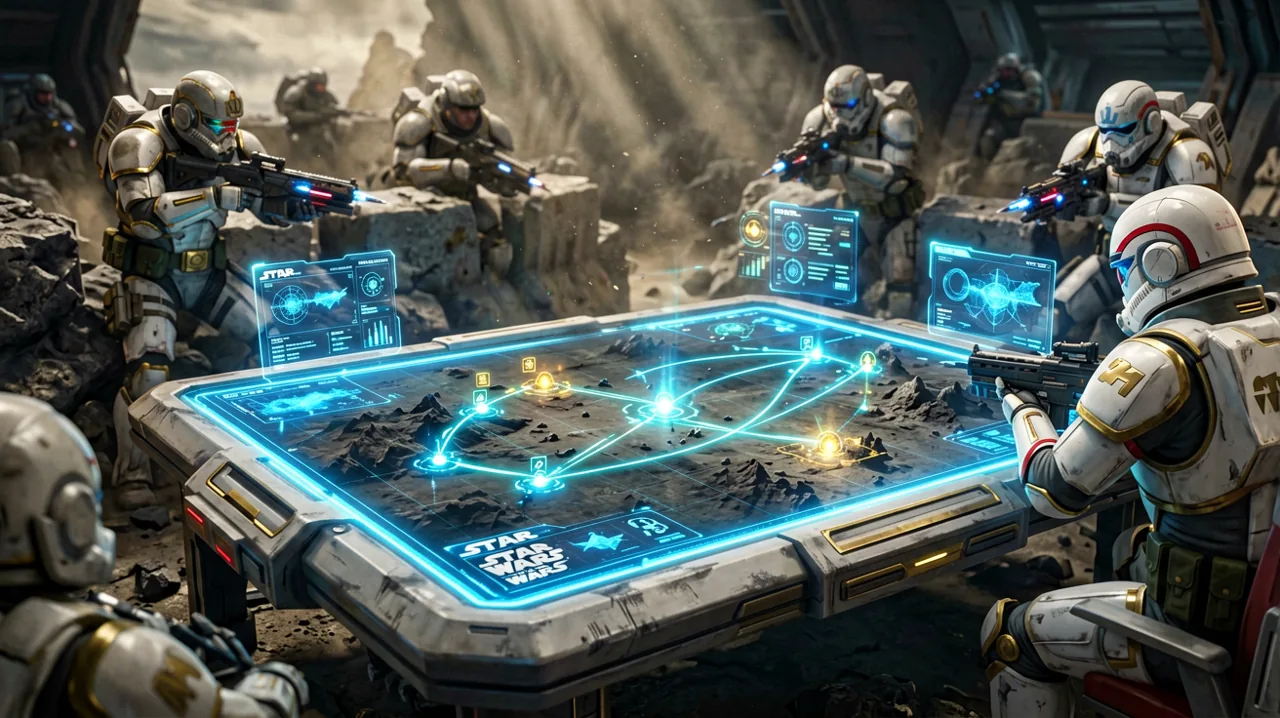
With the August 27 launch of STAR WARS Zero Company practically knocking at our door, Bit Reactor is making their final media rounds, pulling back the curtain on how their highly anticipated turn-based tactics game actually operates on the battlefield.
For months, veterans of the genre have debated how the studio—founded by former Firaxis developers who worked on the modern XCOM reboots—would balance the intricate, unforgiving nature of tactical strategy with the mainstream appeal required of a massive Star Wars release. A recent string of interviews and tactical gameplay breakdowns have finally provided some concrete answers. Between a surprisingly flexible Three Action Point (3-AP) system, a newly revealed “Advantage” resource pool, and a design philosophy focused heavily on onboarding, Zero Company is shaping up to be much more than a simple franchise reskin.
”Bringing This Genre to New People”
In a comprehensive interview published this week by Metro.co.uk, the developers at Bit Reactor spoke candidly about the pressure of their legacy and the opportunity presented by the Clone Wars era (circa 20 BBY). Turn-based tactics games are notoriously difficult to market to players accustomed to fast-paced action. They are typically slow, methodical, and heavily reliant on punishing mechanics that can wipe out hours of progress with a single bad dice roll.
However, Bit Reactor feels confident they have cracked the code. The team explicitly noted their pride in having “finally brought this genre to new people.” This does not mean they have watered down the tactical depth that strategy enthusiasts crave. Instead, it seems the developers have focused extensively on readability and eliminating the friction that usually frustrates newcomers.
By commanding a custom squad known as “Zero Company” from the safety of The Den—your base of operations—players step into the boots of Commander Hawks. The narrative context of leading diverse operatives across hostile planets naturally lends itself to learning squad dynamics. If you are entirely new to the genre, reading through our beginner-guide can help you understand the foundational concepts of cover and flanking before the game launches. Bit Reactor’s goal is to ensure that when a blaster shot misses a heavily armored Separatist droid, the player understands why it missed based on clear visual feedback, rather than feeling cheated by a hidden percentage tracker.
Breaking the Mold: The 3-AP System
Perhaps the most significant revelation from the recent Gamereactor UK breakdowns and community-translated deep dives is a fundamental shift in how turns are structured. Strategy veterans are intimately familiar with the standard two-action economy: move and shoot, or sprint to cover and end your turn.
Star Wars Zero Company reportedly abandons this in favor of a Three Action Point (3-AP) system for each character.
This single mechanical change fundamentally alters how you approach every firefight on planets like Christophsis or the dense jungles of Felucia. Having three points to spend allows for a staggering amount of tactical granularity. Instead of being locked into binary choices, a single operative can now move into half-cover, throw a thermal detonator to destroy enemy fortifications, and still have an action left to drop into overwatch.
Alternatively, a heavy weapons specialist could use two action points to set up a sustained suppressing fire zone, while reserving their final point to reposition if they are flanked. This system heavily encourages micro-maneuvering and aggressive flanking tactics, punishing players who turtle behind the same piece of cover for too long. If you want to dive deeper into how mobility dictates the flow of battle, our combat-tactics-guide explores the interplay of high ground and flanking maneuvers.
The 3-AP economy also scales incredibly well with the varying skill sets of your recruits. A nimble Twi’lek scout might possess abilities that refund action points upon a successful flank, allowing them to chain together extensive movement sequences, while a heavily armored Clone veteran might spend all three points simply activating and firing a devastating rotary blaster.
The Shared “Advantage” Economy
Alongside the action point overhaul, international community hubs have highlighted another major gameplay pillar: the Advantage system. Unlike traditional RPGs or strategy games where each character has individual, isolated cooldowns for their most powerful abilities, Zero Company reportedly utilizes a shared resource pool for the entire squad.
As your squad executes successful maneuvers—such as landing critical flanks, flushing enemies out of cover, or securing high ground—you build up “Advantage.” This pooled resource acts as the fuel for your operatives’ most devastating ultimate attacks and class synergies.
This creates a fascinating dynamic when crafting your roster. You cannot simply stack a team full of heavy damage dealers, because they will all be competing for the same limited Advantage pool. Effective leadership requires balance. You will need operatives whose primary role is to generate Advantage through setup moves and debuffs, feeding that resource to your heavy hitters when the time is right.
Imagine pushing through the darkened trenches of Umbara. Your slicer operative spends their AP hacking a nearby console to blind an enemy patrol—generating a large chunk of Advantage. On the very next activation, your frontline vanguard taps into that pooled Advantage to unleash a devastating melee sweep that would otherwise be locked. Figuring out which classes feed into each other will be paramount. For a closer look at optimizing these synergies, check out our best-squad-composition breakdown.
The PC Pre-order Anomaly
Despite the steady stream of exciting gameplay reveals, a peculiar narrative has taken root across social media and Reddit over the past few days. With the August 27 release date rapidly approaching, PC players have noticed a glaring omission: there is still no option to pre-order the game on Steam or the Epic Games Store.
In a thread that gained massive traction on various gaming subreddits, players expressed confusion over the missing pre-order button for Steam App 2075800. In an era where digital pre-orders are typically available months in advance, especially for titles backed by publishing giants like Electronic Arts, a delayed storefront activation is unusual.
Some community members speculate this might be a calculated marketing tactic to drive massive day-one sales figures, creating an immediate spike in concurrent player counts to trigger algorithmic visibility on the Steam store front page. Others wonder if it is tied to last-minute backend integrations with EA’s account systems.
Regardless of the reasoning, the lack of a pre-order button does not indicate a delay. Bit Reactor and EA have firmly cemented the August 27 launch window. Console players on PlayStation 5 and Xbox Series X|S have already been navigating the various digital storefront tiers. If you are still weighing which version to grab once the gates finally open on PC, our overview of the zero-company-editions-preorder covers the differences between the base game and the robust collector’s edition offerings.
Preparing for Deployment
The closer we get to launch, the clearer Bit Reactor’s vision becomes. Star Wars Zero Company is not attempting to be an unforgiving, spreadsheet-driven simulation, nor is it a mindless action game masquerading as a tactical experience.
By introducing the 3-AP system and the shared Advantage economy, the developers are actively handing players more tools to solve battlefield puzzles. It is a philosophy of giving you enough rope to either pull off a cinematic, galaxy-saving maneuver, or completely hang your squad out to dry.
And make no mistake—while the mechanics might be designed to be readable for newcomers, the stakes remain incredibly high. The Clone Wars are brutal, and losing a heavily upgraded operative to a foolish tactical error will hurt. For those wondering exactly how punishing the campaign can get, our breakdown on how-permadeath-works is essential reading before you finalize your roster.
As we count down the final days until Hawks and Zero Company touch down, the focus shifts from speculation to preparation. Upgrade The Den, review the planetary intel, and get ready to lead your squad into the tactical unknown.