
Star Wars Zero Company: How Hawks and Emergent Tactics Are Winning Over the Community
From clutch extractions to memorable voice lines, discover how Commander Hawks and intense tactical gameplay are creating unforgettable Clone Wars moments.
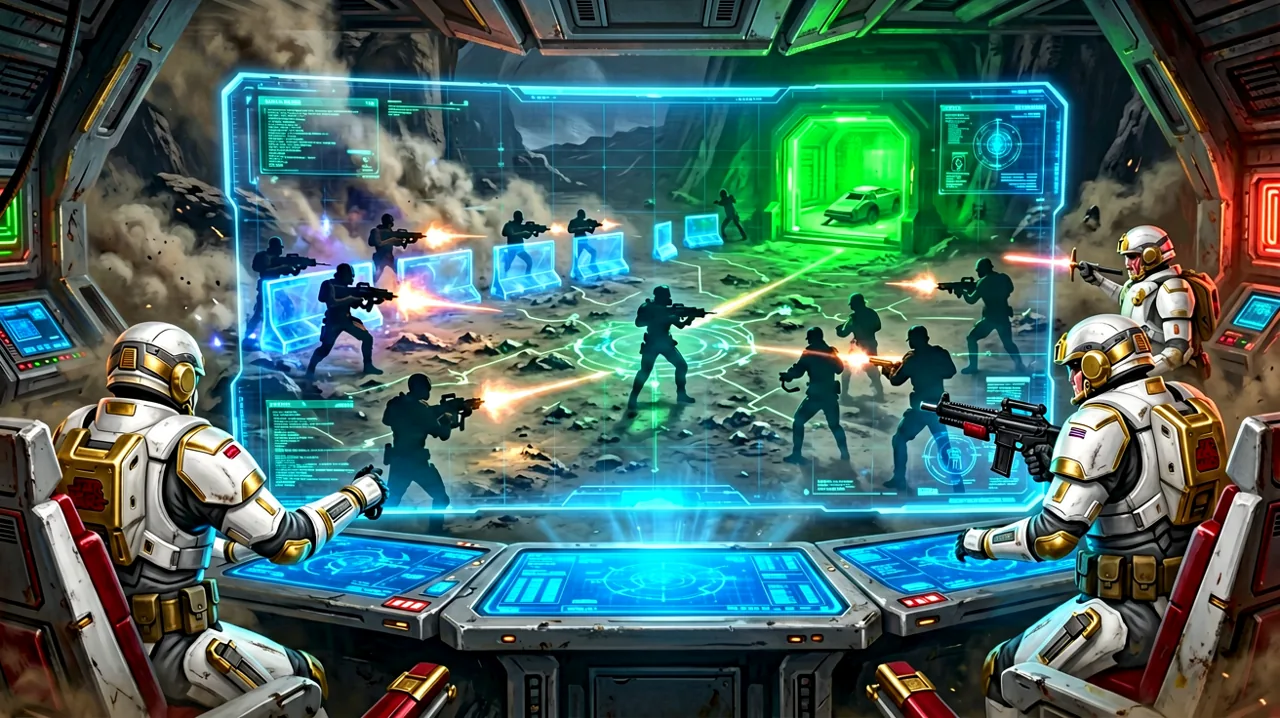
It has been roughly three weeks since Bit Reactor and Electronic Arts officially launched STAR WARS Zero Company, thrusting PC, PlayStation 5, and Xbox Series X|S players into the gritty, blaster-scorched battlefields of the Clone Wars. Set against the turbulent backdrop of 20 BBY, the game asks players to recruit, manage, and command a customized roster of mercenaries, clones, and outcasts from their central hub, the Den.
While the initial launch window was dominated by discussions surrounding system performance, optimal framerates, and understanding the basics of turn-based cover mechanics, the conversation has noticeably shifted. Now that a significant portion of the player base has rolled credits on the sprawling campaign, the community is collectively reflecting on what makes Zero Company truly special. Beyond the robust tactical layer of flanking maneuvers and action points, it is the game’s emergent storytelling and phenomenal character writing that are dominating forum discussions. At the absolute center of this praise is the game’s protagonist, Commander Hawks, alongside the heart-pounding tension of the game’s mission extraction phases.
The Narrative Triumph of Commander Hawks
In the realm of turn-based strategy games, player-controlled commanders often fall into one of two categories: they are either entirely silent, featureless tacticians viewing the battlefield from a satellite feed, or they are rigidly predefined characters with little room for player expression. Bit Reactor has managed to thread the needle perfectly with Hawks.
Over the past few days, social media and dedicated subreddits have been flooded with appreciation posts regarding the game’s writing. Players who have completed the campaign are openly citing Hawks as one of their favorite original characters introduced in the modern era of the franchise. What makes Hawks work so incredibly well is their active presence on the battlefield. They are not safely tucked away in orbit; they are down in the mud of Christophsis and the toxic jungles of Felucia, taking plasma fire alongside the operatives you have painstakingly recruited.
The tone of the narrative has also drawn high praise from critics. A recent retrospective by WaypointVICE elegantly described the massive narrative spectrum that the sci-fi universe encompasses—ranging from the grounded, oppressive political tension of Andor to the operatic, emotionally volatile space drama of Revenge of the Sith. Zero Company manages to carve out a comfortable niche right in the middle. It does not shy away from the brutal reality of the galactic conflict, presenting a galaxy where tyranny and corruption leak through the cracks of the Republic, yet it retains a distinct sense of adventure. Hawks serves as the perfect anchor for this tone, offering a pragmatic, street-smart perspective that contrasts sharply with the lofty ideals of the Jedi or the strict conditioning of standard military units. If you want to understand how this narrative fits into the larger timeline, review our breakdown of the story and setting.
The Impact of the Late-Game Twist
The strength of the writing culminates in the latter half of the campaign. Major gaming outlets, including Aftermath, have recently begun publishing analytical pieces regarding a specific “[Spoiler] Moment” that occurs late in the story. While we will strictly avoid detailing the twist here to preserve the experience for those still progressing through the campaign, the sheer volume of discourse surrounding it speaks volumes.
This pivot point drastically recontextualizes the overarching mission of your squad and forever alters the dynamic with the primary antagonist, Kundri Fathom. It is a testament to Bit Reactor’s confidence that they were willing to take substantial narrative risks. Instead of delivering a safe, isolated side-story that neatly resets by the time the credits roll, they have crafted an event that feels genuinely consequential to the lore. The community’s reaction has been overwhelmingly positive, proving that strategy fans are just as hungry for compelling character arcs as they are for complex skill trees.
The Agony and Ecstasy of the Exfil
However, the most memorable stories in Zero Company are not always the ones written by the developers; they are the emergent narratives generated entirely by the game’s punishing mechanics. A highly upvoted post on the community subreddit perfectly captured the shared experience of the mid-game difficulty spike, specifically focusing on the sheer terror of mission extractions—affectionately referred to as the “Exfil.”
According to countless player testimonies, the typical rhythm of a mid-to-late game operation begins with methodical, calculated advancements. You use cover effectively, set up overlapping overwatch cones, and carefully manage your action points to suppress Kundri Fathom’s forces. But as the operation drags on, the war of attrition begins to take its toll. Armor degrades, thermal detonators are depleted, and your operatives are left fighting on fumes.
The true test of a tactician arrives in the final twenty-five percent of the mission. Players have coined the term “bronze box” to describe the final heavy-combat objective area, a brutal chokepoint that usually requires expending your last remaining resources. Once the objective is secured, the objective marker violently shifts to the “green box”—the designated extraction zone.
This transition fundamentally alters the flow of the game. It is no longer about winning the firefight; it is a desperate, chaotic sprint for survival. The tactical map that you once carefully controlled is suddenly flooded with enemy reinforcements. The tension is palpable as you realize that methodical flanking is no longer an option. Every single decision—whether to dash a wounded operative toward the landing zone or have them hunker down behind heavy cover to draw fire—carries the massive weight of potential permadeath.
Squad Banter and Surviving by a Thread
What elevates these frantic retreats from frustrating to unforgettable is how the characters react to the chaos in real-time. Bit Reactor has implemented a dynamic voice system that triggers based on the dire state of the squad. When the green extraction zone finally lights up through the smoke, the suffocating tension is frequently shattered by Hawks’ distinct personality.
Players have shared incredible moments where, right as the squad is facing absolute annihilation, Hawks will execute a clutch maneuver and taunt the advancing enemies with lines like, “I see ya, wouldn’t want to be you!” before diving toward the transport. This bravado is met with organic, system-driven reactions from the rest of the team. For instance, Tel—one of the more cautious and cynical operatives available for recruitment—has been noted to groan wearily at Hawks’ antics, flatly observing, “I’m not doing that thing you do… I think it’s time to leave.”
These moments of levity amidst the mechanical stress are pure gold. They transform standard strategy units into a cohesive, believable crew of exhausted survivors. It is in these split-second exfils that the bonds you forge in the Den truly manifest on the battlefield. You are not just saving a unit with a good stat spread; you are rescuing your favorite smart-mouthed mercenary.
Theorycrafting for Survival: Passives and Synergies
Of course, surviving long enough to hear this banter requires a deep understanding of the game’s mechanics. As players encounter these brutal extraction phases, the community has pivoted heavily toward advanced theorycrafting. Navigating the Exfil successfully often comes down to exploiting specific class talents and passive abilities.
For example, players have reported that the operative Trick possesses a phenomenal passive ability that triggers a 10% self-heal under specific combat conditions. In a game where medical supplies are strictly limited and incoming damage is exceptionally punishing, a passive 10% heal can literally be the difference between a successful extraction and a devastating squad wipe.
This realization has sparked a wave of detailed breakdowns across various gaming sites, focusing on the “Advantage” system, intricate talent tree paths, and weapon tier lists. The Gunslinger class build, in particular, has seen a massive surge in popularity. Known for its high mobility and burst damage potential, a well-built Gunslinger is proving to be invaluable when you need to cover a retreating squad and manipulate enemy sightlines. For those looking to optimize their own roster before tackling the harder difficulties, mastering these synergies is absolutely essential. You can explore more about building the perfect team in our overview of the best squad composition.
Looking Ahead
As STAR WARS Zero Company rounds out its first month on the market, it is clear that the game has successfully cultivated a deeply invested player base. The initial comparisons to other heavyweights in the turn-based genre were inevitable, but Bit Reactor has proven that they bring their own unique flavor to the table. By seamlessly weaving a gripping, consequential narrative with brutally uncompromising tactical gameplay, they have delivered an experience that resonates on multiple levels.
Commander Hawks has firmly established their place in the pantheon of great gaming protagonists, and the unforgettable thrill of a nail-biting extraction will keep players returning to the Den for cycle after cycle. Whether you are currently fine-tuning your Gunslinger build, agonizing over which operative to send into the line of fire, or simply reeling from the narrative implications of the late-game twist, Zero Company is proving to be a watershed moment for strategy fans and lore enthusiasts alike.