
Star Wars Zero Company: The Caisson, Cycle 13 Tactics, and the 'Midnight Suns' Anxiety
Explore the community's love for The Caisson dropship, the tactical shift at campaign Cycle 13, and why Zero Company players fear a lack of post-launch DLC.
It has been a little over two weeks since STAR WARS Zero Company launched on August 27, 2026, and the dust is finally beginning to settle across the battlefields of Christophsis and Geonosis. Bit Reactor’s ambitious turn-based tactical game has managed to capture the raw, gritty essence of the Clone Wars era, operating far away from the polished halls of the Jedi Temple. As players dig deeper into the mid-game content and spend dozens of hours managing their squads in the Den, a unique dual narrative is emerging within the community.
On one hand, there is a massive outpouring of creativity and praise for the game’s immersive mechanics and stellar storytelling. On the other hand, a lingering sense of dread is beginning to permeate the player base—an anxiety that this brilliant tactical experience might not receive the long-term support it genuinely deserves.
The Caisson: A Covert “Garbage Truck” Capturing Hearts
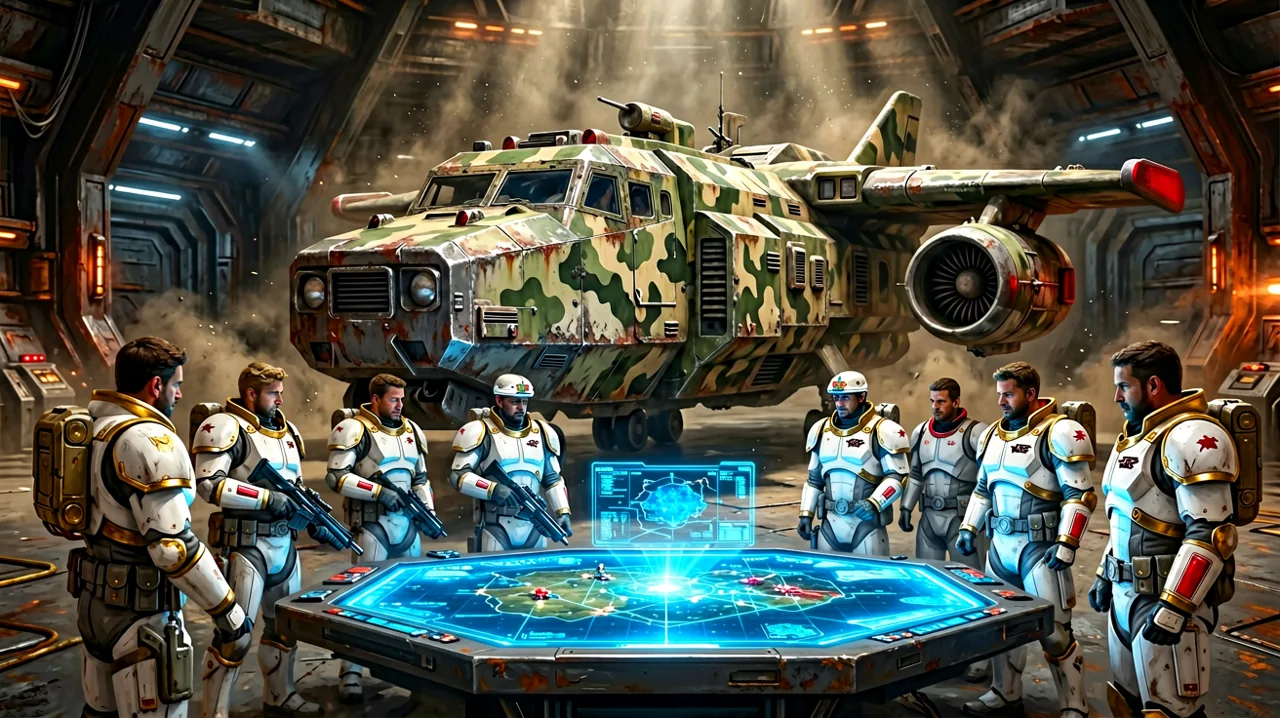
When you think of Star Wars dropships, the sleek LAAT/i Republic Gunship or the menacing Imperial Lambda-class shuttle usually come to mind. Zero Company deliberately subverts this expectation with The Caisson, the primary transport vessel used by Commander Hawks and the operatives of the Den.
The community has quickly fallen in love with this unorthodox vessel. Described affectionately by fans as a “suped-up garbage truck,” The Caisson perfectly encapsulates the clandestine nature of your operations against Kundri Fathom. It is entirely unglamorous, built for utility, heavy armor, and flying completely under the radar. Its bulky, asymmetrical engine struts and rusted hull plates make it look more like a civilian waste hauler than an elite military strike craft, which is exactly why it works for covert insertions onto hostile planets like Ryloth and Umbara.
The obsession with The Caisson has grown so intense that players are now attempting to meticulously recreate the ship in other games, most notably Starfield. Utilizing extensive ship-building mods, fans are piecing together micro-modules and specialized habs to capture that exact rusted, blocky aesthetic. This level of dedication highlights just how well Bit Reactor nailed the game’s visual identity. It is a striking reminder that the Star Wars universe is vast, and the gritty, worn-down aesthetic of the fringes is just as compelling as the shining armor of the frontline clone legions.
Beyond the Grid: Third-Person Immersion
Another aspect of Zero Company that is currently drawing heavy praise—and prompting players to seek out similar experiences—is its integration of third-person exploration. While the core combat remains firmly rooted in an isometric, grid-based tactical view, the time spent between operations feels entirely different.
When you are inside the Den, you are not just navigating a sterile UI menu to upgrade weapons or assign skill points. You actively control Hawks in a third-person perspective, walking through the corridors of your customized base. You can visit the cantina area to listen to the banter of your diverse roster of operatives—ranging from cynical bounty hunters to battle-hardened clone veterans.
Furthermore, some pre-combat infiltration phases allow for brief third-person movement to scout deployment zones before the tactical grid officially locks in. This hybrid approach significantly elevates the RPG elements of the game. It bridges the gap between managing statistics and actually feeling like a commander walking among the troops. This mechanical choice is a massive part of why older fans of the franchise report that the game’s story and setting makes them feel incredibly connected to the universe in a way traditional menus simply cannot achieve.
Surviving Cycle 13: The Early Campaign Shift
As the player base matures, a significant portion of the community has recently hit what is being referred to as the “Cycle 13 Shift.” Zero Company measures campaign progression in Cycles, managing the passage of time as you research gear, heal wounded operatives, and scan the galaxy map for Kundri Fathom activity.
According to numerous community reports, hitting Cycle 13 marks a noticeable escalation in enemy tactics and operational difficulty. Without delving into heavy story spoilers, this is the point where relying on basic mechanics will no longer guarantee survival. If you have been scraping by, Cycle 13 is where the game demands mastery of advanced combat tactics.
To survive the post-Cycle 13 operations, commanders must internalize the following mechanical truths:
- Flanking is Mandatory, Not Optional: The days of engaging in static firefights from behind half-cover are over. Kundri Fathom elite units will aggressively push your positions. You must use your high-mobility operatives to secure flanking angles, which completely negates enemy cover bonuses and significantly increases critical hit chances.
- Overwatch Traps: Managing your Action Points (AP) to leave room for Overwatch is critical. Instead of spending your last AP on a low-percentage shot, setting up overlapping fields of Overwatch fire allows you to punish enemy advancements during their turn.
- Squad Synergy over Raw Damage: Bringing four heavy damage dealers will leave you tactically inflexible. The best squad compositions at this stage require dedicated support classes to strip enemy armor, apply suppression to pin down high-threat targets, and heal units to avoid the devastating consequences of the permadeath system.
The difficulty spike at this cycle proves that the game has serious tactical teeth, rewarding players who carefully plan their turns and punishing those who rush forward blindly.
The “Midnight Suns” Trauma and Post-Launch Anxiety
Despite the glowing mechanical reception, a dark cloud hangs over the game’s community forums. A highly upvoted sentiment currently dominating discussions is the fear that Zero Company might suffer the same fate as Marvel’s Midnight Suns—another critically acclaimed, deeply strategic turn-based game that ultimately failed to secure long-term franchise life due to complex commercial and licensing realities.
The anxiety stems from a combination of factors. First, despite strong player counts and high placement on Steam’s top-seller charts during launch week, neither Electronic Arts nor Bit Reactor have officially announced any major sales milestones (such as hitting one million units sold). In the modern gaming industry, silence regarding sales figures is often interpreted by players as a sign of underperformance.
Second, the pre-launch reports regarding significant furloughs at Bit Reactor remain fresh in the community’s mind. While management previously stated the goal was to bring staff back once revenue began flowing, the current skeleton crew appears entirely focused on delivering essential fixes—such as the recent Patch 1.1 that squashed various bugs—rather than teasing future content.
Finally, the complete lack of a post-launch DLC roadmap is the primary source of this “trauma.” In an era where almost every major release outlines its next six to twelve months of content before the game even launches, EA’s silence is deafening.
Players desperately want more. The framework of the game is practically begging for expansions. The community is already theorycrafting what a DLC could look like: adding entirely new planetary biomes beyond the existing roster, introducing new playable alien species for recruitment in the Den, or implementing specialized operative classes that manipulate the battlefield in fresh ways.
For now, commanders are left in a state of limbo. They are thoroughly enjoying the grueling tactical battles, upgrading The Caisson, and unraveling the mysteries of Kundri Fathom. Yet, every successful extraction is tinged with the fear that Commander Hawks’ journey might end abruptly, not by a blaster bolt, but by a boardroom decision. The community is loudly signaling their willingness to support this game for years to come; the ball is now entirely in EA and Bit Reactor’s court to confirm whether Zero Company will be a one-off cult classic or the foundation of a lasting tactical franchise.