Will Star Wars: Zero Company Be on GeForce Now? Cloud Gaming Explained
As the August 27 release date approaches, tactical strategy fans are wondering if Star Wars: Zero Company will be playable on GeForce Now and cloud platforms.
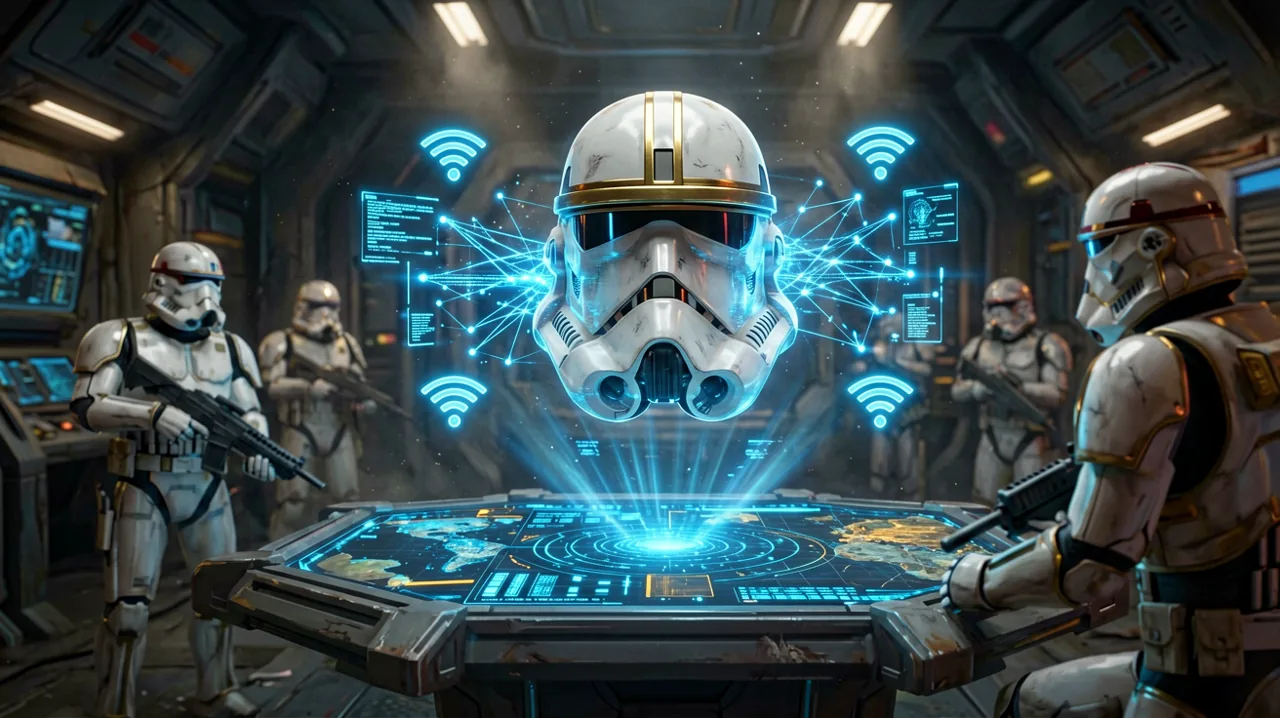
As the highly anticipated August 27, 2026 release date for Star Wars: Zero Company rapidly approaches, the community is finalizing their pre-orders, clearing their hard drives, and analyzing every frame of the recently released gameplay trailers. Developed by Bit Reactor in collaboration with Respawn Entertainment and Lucasfilm Games, this uncompromising XCOM-like tactical strategy title is confirmed to launch natively on PlayStation 5, Xbox Series X|S, and PC via Steam (App ID 2075800).
However, as players evaluate their current hardware against the official system requirements, a growing number of fans are looking toward alternative platforms. Over the past few days, discussions across the community—particularly among Reddit users analyzing the packed August release slate—have highlighted a persistent question: Will we be able to stream Star Wars: Zero Company via Nvidia GeForce Now or Xbox Cloud Gaming at launch?
Given the game’s visually dense 20 BBY Clone Wars environments and its deeply methodical tactical mechanics, the prospect of commanding your squad from the cloud is incredibly appealing. While we are still waiting for definitive confirmation from Electronic Arts and Bit Reactor, we can break down the current expectations, the history of EA on cloud platforms, and why this specific turn-based framework is structurally perfect for cloud streaming.
The Current Status of GeForce Now Support
At the time of writing, Bit Reactor and EA have not officially confirmed GeForce Now (GFN) support for Star Wars: Zero Company. Community members have actively raised the question across forums, noting that August 2026 is an exceptionally crowded month for demanding hardware releases.
Despite the lack of an official announcement, there is a strong precedent to remain optimistic. Electronic Arts has historically been highly cooperative with Nvidia’s cloud gaming service. Major titles across the publisher’s portfolio frequently opt-in to GeForce Now either at launch or shortly after. Because Zero Company is a single-player experience without the complexities of kernel-level competitive anti-cheat software—a technical hurdle that often delays multiplayer games from joining cloud services—the path to GeForce Now integration is fundamentally straightforward.
For players with older hardware or Mac users who want to recruit operatives and upgrade the Den without investing in a new PC, GFN would provide critical access to the Steam version of the game. If you purchase the game on Steam, a GFN opt-in from EA would allow you to stream your Steam library directly to your display, fully rendering the chaotic, crystal-strewn battlefields of Christophsis or the lush, hazardous jungles of Felucia on Nvidia’s server blades rather than your local GPU.
Why Turn-Based Tactics Are Flawless for Cloud Gaming
When players think about cloud gaming, their immediate concern is input latency. In a fast-paced action game or a competitive shooter, a delay of even fifty milliseconds between a button press and a character’s reaction can mean the difference between a successful dodge and a frustrating defeat.
Star Wars: Zero Company completely sidesteps this issue thanks to its core gameplay loop. As a tactical, turn-based strategy game rooted in the era of the Clone Wars, the action moves strictly at your pace. You are not relying on twitch reflexes to survive a sudden ambush. Instead, you are evaluating the grid, calculating optimal cover geometry, and methodically spending your action points.
If your network connection experiences a brief stutter while streaming via GeForce Now, Commander Hawks and your customized squad will simply wait for your next command. The game’s intricate mechanics—such as establishing intersecting lines of overwatch, executing flanking maneuvers against Separatist droids, and triggering class synergies—require deep analytical thinking rather than rapid inputs.
This makes the tactical genre uniquely resilient to the minor imperfections of cloud gaming networks. You can take five minutes to meticulously plan a breach into a Kundri Fathom stronghold on the shadowy surface of Umbara, confirming your operative’s movement only when you are absolutely certain of the tactical advantage. Strategy games have historically been the most reliable performers on cloud platforms, and Zero Company is poised to benefit massively from this format.
Xbox Cloud Gaming and Game Pass Expectations
Beyond Nvidia’s ecosystem, console players are equally curious about the Xbox Cloud Gaming platform. Star Wars: Zero Company is confirmed for Xbox Series X|S, meaning the fundamental architecture is already optimized for Microsoft’s console ecosystem.
Currently, the game is a premium, full-priced release. There has been no indication from EA or Bit Reactor that it will launch day-one on Xbox Game Pass. Consequently, immediate access via Xbox Cloud Gaming—which is heavily tied to the Game Pass Ultimate subscription—is reportedly not expected at launch.
However, EA Play is bundled directly with Game Pass Ultimate. While new EA releases typically only offer a 10-hour trial via EA Play at launch, they reliably migrate to the standard EA Play vault after roughly six to twelve months. If you are willing to wait, it is highly expected that Zero Company will eventually be streamable to mobile devices, tablets, and older Xbox One consoles via Xbox Cloud Gaming when it makes that transition.
The Den, Operative Management, and Portable Play
One of the most exciting prospects of potential cloud gaming compatibility is the ability to manage your campaign away from your primary gaming setup. Zero Company is not entirely about boots-on-the-ground combat; a massive portion of your 30 to 40-hour campaign will be spent inside the Den, your squad’s fully customizable base of operations.
Here, you will recruit new operatives—ranging from seasoned clone veterans to unpredictable, multi-species bounty hunters—upgrade weapons, research new tactical gear, and manage the physical wear-and-tear of your squad. This management layer is inherently menu-driven and requires careful reading of stats, traits, and loadout configurations.
Imagine booting up GeForce Now on a tablet during a lunch break or commute. You would not necessarily need to drop into a high-stakes permadeath mission where a single mistake could cost you your favorite heavy gunner. Instead, you could spend your cloud session organizing your roster, customizing armor permutations, allocating skill points, and preparing the loadouts for your next major deployment. Once you return home to your PC or PS5, you can seamlessly tackle the actual combat operation on your main screen.
Steam Deck vs. Cloud Streaming
For portable PC gamers, the Steam Deck remains a massive point of discussion. While we expect Star Wars: Zero Company to run reasonably well on handheld PCs, modern Unreal Engine titles can severely drain battery life and push handheld APUs to their absolute thermal limits.
If GeForce Now support is enabled, Steam Deck users will have a compelling alternative to local rendering. By streaming the game through the GFN browser client on the Deck, players could enjoy maximum graphical settings, dynamic lighting, and a locked 60 frames-per-second, all while extending the handheld’s battery life to several hours. For a game that demands constant situational awareness and crystal-clear visibility of the tactical grid, avoiding the compromises of low-resolution rendering on a portable device is a massive quality-of-life upgrade.
Looking Ahead to August
As we inch closer to August 27, the volume of community questions regarding platform availability will undoubtedly increase. We strongly recommend that players waiting for cloud confirmation hold off on purchasing until EA explicitly lists GeForce Now as a supported platform. Bit Reactor has been remarkably transparent during their development updates, and we anticipate they will address the cloud gaming community in their final pre-launch communications.
For now, if you are planning your ideal squad composition and brushing up on the combat tactics required to outsmart Kundri Fathom’s forces, you can rest easy knowing that the turn-based nature of Zero Company will make it an elite cloud gaming experience—whenever it officially arrives on the servers. We will continue to monitor developer interviews, official Discord channels, and EA’s press releases for any concrete confirmations regarding Nvidia GeForce Now and Xbox Cloud Gaming support.